Quotessence
Home / Quotes / Quote by Gail Tsukiyama

Quote by Gail Tsukiyama

Work

The Street of a Thousand Blossoms

This book takes readers on a journey through a bustling city street, where the beauty of blooming flowers serves as a backdrop for the stories of its residents. The narrative weaves together various characters and their personal struggles, triumphs, and connections, creating a rich tapestry of human experience. more

Author
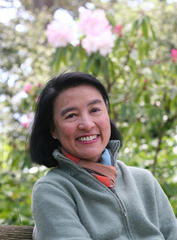
Gail Tsukiyama
Gail Tsukiyama

Gail Tsukiyama is an American novelist known for her works that depict Asian culture. Born in 1957, her novels often feature female protagonists and explore themes of personal growth, family, and social change. Tsukiyama's writing has been widely appreciated by readers and has earned her numerous literary awards. more

You May Also Like

“It was a tale well known to children all over Africa: Abu Kassem, a miserly Baghdad merchant, had held on to his battered, much repaired pair of slippers even though they were objects of derision. At last, even he couldn't stomach the sight of them. But his every attempt to get rid of his slippers ended in disaster: when he tossed them out of his window they landed on the head of a pregnant woman who miscarried, and Abu Kassem was thrown in jail; when he dropped them in the canal, the slippers choked off the main drain and caused flooding, and off Abu Kassem went to jail... 'One night when Tawfiq finished, another prisoner, a quiet dignified old man, said, 'Abu Kassem might as well build a special room for his slippers. Why try to lose them? He'll never escape.' The old man laughed, and he seemed happy when he said that. That night the old man died in his sleep. We all saw it the same way. the old man was right. The slippers in the story mean that everything you see and do and touch, every seed you sow, or don't sow, becomes part of your destiny... In order to start to get rid of your slippers, you have to admit they are yours, and if you do, then they will get rid of themselves. Ghosh sighed. 'I hope one day you see this as clearly as I did in Kerchele. The key to your happiness is to own your slippers, own who you are, own how you look, own your family, own the talents you have, and own the ones you don't. If you keep saying your slippers aren't yours, then you'll die searching, you'll die bitter, always feeling you were promised more. Not only our actions, but also our omissions, become our destiny.”

“Years after the war, after marriages, children, divorces, books, he came to Paris with his wife. He phoned her. It's me. She recognized him at once from the voice. He said, I just wanted to hear your voice. She said, it's me, hello. He was nervous, afraid, as before. His voice suddenly trembled. And with the trembling, suddenly, she heard again the voice of China. He knew she'd begun writing books, he'd heard about it through her mother whom he'd met again in Saigon. And about her younger brother, and he'd been grieved for her. Then he didn't know what to say. And then he told her. Told her that it was as before, that he still loved her, he could never stop loving her, that he'd love her until death.”