“Our dream of heaven cannot be realized on earth. Once we begin to rely upon our reason, and to use our powers of criticism, once we feel the call of personal responsibilities, and with it, the responsibility of helping to advance knowledge, we cannot return to a state of implicit submission to tribal magic. For those who have eaten from the tree of knowledge, paradise is lost. The more we try to return to tribal heroism, the more surely do we arrive at the Inquisition, at the Secret Police, and at a romanticized gangsterism. Beginning with the suppression of reason and truth, we must end with the most brutal and violent destruction of all that is human. There is no return to a harmonious state of nature. If we turn back, then we must go the whole way, we must return to the beasts. It is an issue which we must face squarely, hard though it may be for us to do so. If we dream of a return to our childhood, if we are tempted to rely on others and so be happy, if we turn back from the task of carrying our cross, the cross of humaneness, of reason, of responsibility, if we lose courage and flinch from the strain, then we must try to fortify ourselves with a clear understanding of the simple decision before us. We can return to the beasts. But if we wish to remain human, then there is only one way, the way into the open society. We must go on into the unknown, courageously, using what reason we have, to plan for security and freedom.”
Quote by Karl Popper
Work
This book delves into the concept of open societies, analyzing their characteristics and the historical figures and movements that have opposed them. It explores the philosophical underpinnings of open societies and the challenges they face, offering a comprehensive look at the dynamics of political and social systems. more
Author
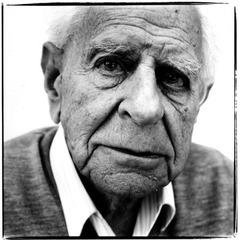
Karl Popper (July 28, 1902 – September 17, 1994) was an influential philosopher known for his work on critical rationalism and falsificationism. He is renowned for his contributions to the philosophy of science, political philosophy, and epistemology, with his ideas having a profound impact on these fields. more
You May Also Like
“The world is your playground, you're free to do whatever and take existence for a ride”
“You are not the rejected one. You are the one who broke free.”