Quotessence
Home / Quotes / Quote by Gustave Flaubert

Quote by Gustave Flaubert

“In his earliest youth, he had drawn inspiration from really bad authors, as you may have seen from his style; as he grew older, he lost his taste for them, but the excellent authors just didn’t fill him with the same enthusiasm”
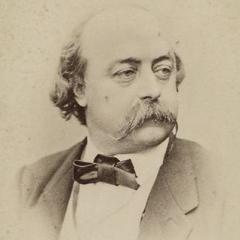
Quote by Gustave Flaubert

Work

November

Browse quotes and source details for this work. more

Author

Gustave Flaubert
Gustave Flaubert

Gustave Flaubert, born on December 12, 1821 and died on May 8, 1880, was a prominent French writer of the 19th century. Known for his exquisite literary skills and profound psychological portrayals, Flaubert is best remembered for his masterpiece 'Madame Bovary'. more

You May Also Like

“This work represents an early effort with Cybernetic Technology Enhanced Consciousness (TEC). Mynt says it is easier to work with someone when they are already traveling the path to higher consciousness. This type of Cybernetic Union will become more common in the coming era.”

“The Cartesian mechanistic worldview has been responsible for developing classical physics and technology. Yet the Cartesian tendency to divide the perceived world into individual and separate things can also lead to fear of the Other and excessive self-interest, sometimes resulting in a lack of compassion.”

“In an ironic twist the Cartesian view paved the way to the development of quantum mechanics, which is now pointing the way out of this fragmentation and back to the idea of unity expressed in the early Eastern and Greek philosophies.”

“The complicated instruments of experimental physics peered deep into the submicroscopic world; a world far removed from the macroscopic world of our sensory environment. This subatomic world is so far removed from our senses we never investigate the phenomena themselves but always their consequences. We never see or hear the investigated phenomena directly. We see computer readouts, spots on photographic plates, or Geiger counter clicks.”

“As we penetrate deeper and deeper, we not only have to abandon ordinary language but also long-held concepts that no longer apply to this world of the infinitely small. Now, physicists are dealing with nonsensory experience reality. Like mystics, they have to face the paradoxical aspects of this experience.”

“The divergence from the Newtonian model did not come abruptly but began with changes in the nineteenth century. The first was the discovery and investigation of magnetic phenomena, which could not be described appropriately by the mechanical model as it involved a new type of force. This study of subtler concepts of fields without reference to material bodies was a profound change.”

“In 1926 Werner Heisenberg developed his now famous uncertainty principle. [The original name used by Heisenberg was the “unsharpness” principle (Unsharfeprinzip). Later the name was mistranslated and popularized as the “uncertainty” principle (Unsicherheisrelation), from Elementary Quantum Chemistry, Second Edition by Frank L. Pilar, page 19.] It's a purely mathematical concept. It applies anywhere that there are waveforms. The Unsharpness Principle originates not from Quantum Mechanics, but rather from Classical Wave mechanics.”

“The uncertainty principle had profound implications that 100 years later are still not fully appreciated. The uncertainty principle also signaled an end to the dream of the previous scientific model of the universe. How can one predict future events if one cannot even measure the present state of the universe precisely?”