Quotessence
Home / Quotes / Quote by Barbara Demick

Quote by Barbara Demick

“Dr. Kim couldn't remember the last time she'd seen a bowl of pure white rice. What was a bowl of rice doing there, just sitting out on the ground? She figured it out just before she heard the dog's bark. Up until that moment, a part of her had hoped that China would be just as poor as North Korea. She still wanted to believe that her country was the best place in the world. The beliefs she had cherished for a lifetime would be vindicated. But now she couldn't deny what was staring her plainly in the face: dogs in China ate better than doctors in North Korea.”

Quote by Barbara Demick

Work

Nothing to Envy: Ordinary Lives in North Korea

Browse quotes and source details for this work. more

Author
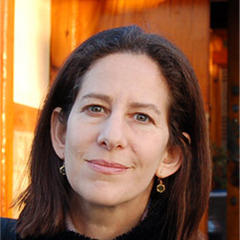
Barbara Demick
Barbara Demick

Barbara Demick is a renowned journalist known for her in-depth reporting on the Korean Peninsula. Her work, 'Crazy Rich Asians,' provides a unique perspective on the reality of North Korean society to the international community. more

You May Also Like

“Among this people there is no leisure class. We often forget that in the United States over half the youth and adults are not in the world earning incomes, but are making homes, learning of the world, or resting after the heat of the strife. But here ninety-six per cent are toiling; no one with leisure to turn the bare and cheerless cabin into a home, no old folks to sit beside the fire and hand down traditions of the past; little of careless happy childhood and dreaming youth.”

“It comforts everybody to think of all Negroes as dirt poor, and to regard those who were not, who earned good money and kept it, as some kind of shameful miracle. White people liked that idea because Negroes with money and sense made them nervous. Colored people liked it because, in those days, they trusted poverty, believed it was a virtue and a sure sign of honesty. Too much money had a whiff of evil and somebody else's blood.”

“In the same essay, Said (who is reviewing Peter Stansky and William Abrams, co-authors obsessed with the Blair/Orwell distinction) congratulates them on their forceful use of tautology: ‘Orwell belonged to the category of writers who write.’ And could afford to write, they might have added. In contrast they speak of George Garrett, whom Orwell met in Liverpool, a gifted writer, seaman, dockworker, Communist militant, ‘the plain facts of [whose] situation—on the dole, married and with kids, the family crowded into two rooms—made it impossible for him to attempt any extended piece of writing.’ Orwell’s writing life then was from the start an affirmation of unexamined bourgeois values. This is rather extraordinary. Orwell did indeed meet Garrett in Liverpool in 1936, and was highly impressed to find that he knew him already through his pseudonymous writing—under the name Matt Lowe—for John Middleton Murry’s Adelphi. As he told his diary: I urged him to write his autobiography, but as usual, living in about two rooms on the dole with a wife (who I gather objects to his writing) and a number of kids, he finds it impossible to settle to any long work and can only do short stories. Apart from the enormous unemployment in Liverpool, it is almost impossible for him to get work because he is blacklisted everywhere as a Communist. Thus the evidence that supposedly shames Orwell by contrast is in fact supplied by—none other than Orwell himself! This is only slightly better than the other habit of his foes, which is to attack him for things he quotes other people as saying, as if he had instead said them himself. (The idea that a writer must be able to ‘afford’ to write is somewhat different and, as an idea, is somewhat—to use a vogue term of the New Left—‘problematic’. If it were only the bourgeois who were able to write, much work would never have been penned and, incidentally, Orwell would never have met Garrett in the first place.)”

“Anyway, they went and built this silly housing project, with us living right across the street from it. Some of the children from the housing project got into trouble. You can't just take people who don't have anything, don't know what they're doing, pack them in a bunch of buildings, and expect it's going to all work out somehow. - Sadie”

“The only thing I knew for sure is I hadn’t slept in ten years. Not really. I’d been fighting my own monster since nine months after 9/11. I had regrets. I had pain that I still can’t find words to describe. But sooner or later you have to make a choice. Maybe fate or luck or God had a plan for me in Jakarta that was greater than an educational leadership conference, a few papers and a book deal. If Vietnam was for Dad, then maybe Jakarta was for me. Indira says I shouldn’t discount that it was Allah’s plan. The way I see it, Allah’s plan is what started my war.”