Quotessence
Home / Quotes / Quote by Charles Dickens

Quote by Charles Dickens

“Son muchos los desheredados, los hambrientos, los criminales, que no tienen mas lecho que la calle, en la que cierran los ojos que no han de volver a abrir en este mundo de miserias”

Quote by Charles Dickens

Work

Oliver Twist

Oliver Twist is a classic novel that follows the life of an orphan boy born in a workhouse. After daring to ask for more food, Oliver is punished and eventually runs away to London. There, he is taken in by a group of young pickpockets led by the cunning Fagin. The story explores themes of poverty, social injustice, and the struggle between good and evil as Oliver encounters both cruel and compassionate characters, ultimately seeking a place where he belongs. more
Author

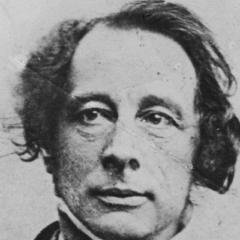
Charles Dickens
Charles Dickens

Charles Dickens, a British writer born on February 7, 1812, and died on June 9, 1870, is one of the greatest novelists of the 19th century. Known for his profound social criticism and vivid narrative style, Dickens' works extensively cover social reality, revealing various issues in the British society of the time. more

You May Also Like

“Strange things are mind-opener because when we see something strange we immediately start thinking! Anything bizarre activates your brain; anything usual makes you sleep!”

“Here are the top three warning signs [you're at risk of foreclosure]: * You used to think nobody cared when your phone rarely rang. Then you missed a couple of house payments. * You're glad gas prices have fallen so you can afford it if you have to move into your car. * You're ready to say, "Let's make a deal" and trade your upside-down house for whatever's behind Door #3.”

“Many thrifts layered a billion dollars of brand-new loans on top of their existing, disastrous hundred million dollars of old loss-making loans, in a hope that the new would offset the old. Each new purchase of mortgage bonds (which was identical to making a loan) was like the last act of a desperate man. The strategy was wildly irresponsible, for the fundamental problem (borrowing short term and lending long term) hadn’t been remedied. The hypergrowth only meant that the next thrift crisis would be larger. But the thrift managers were not thinking that far in advance. They were simply trying to keep the door to the shop open. That explains why thrifts continued to buy mortgage bonds even as they sold their loans.”

“The idea, in the wake of the savings-and-loans disaster, was to spread risk outward from those immediately involved in lending to mortgage borrowers and to attract investors by turning mortgages into securities that offered a wide range of yield-risk profiles. And it worked. In 1980, 67 percent of American mortgages had been held directly on the balance sheets of depository banks. By the end of the 1990s, the risks involved in America’s system of long-term, fixed interest, easy repayment mortgages were securitized and spread across a much wider segment of the financial system”