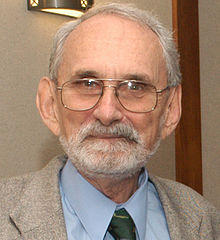
Robert Curl
Robert Curl, a figure in an unknown profession/category, was born on August 23, 1933.
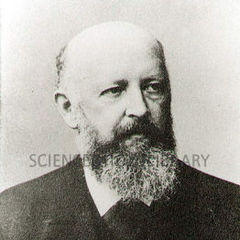
Robert Curl, a figure in an unknown profession/category, was born on August 23, 1933.
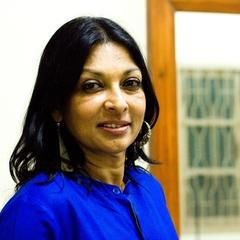
Mallika Sarabhai is a prominent civil rights activist, born on May 9, 1954. She is known for her contributions to the advancement of social justice and equality, particularly in the areas of gender equality and women's empowerment.
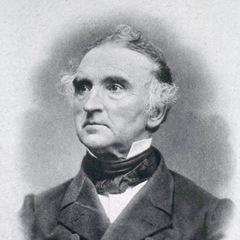
Justus von Liebig, a German chemist born on May 12, 1803, and died on April 18, 1873, is considered one of the founders of organic chemistry. He made significant contributions to the development of agricultural chemistry and food science.
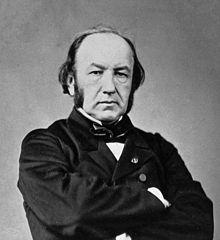
Claude Bernard was a French physiologist born on July 12, 1813, and died on February 10, 1878. He made significant contributions to the field of physiology, particularly in the study of the digestive system and the nervous system.
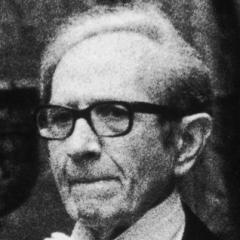
Albert Claude was a renowned researcher in the field of cell biology, known for his groundbreaking contributions. Born on August 24, 1899, in France, he passed away on May 22, 1983, in the United States. During his career, Claude focused on the study of cell organelles, particularly the discovery of lysosomes. His work revealed the complex mechanisms of intracellular material transport, laying a solid foundation for the development of cell biology. Claude's achievements have had a profound impact on subsequent research in the field, and he is often hailed as one of the greatest cell biologists of the 20th century.
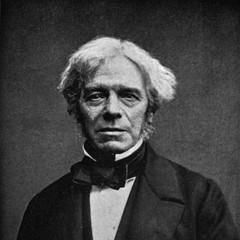
Michael Faraday was an English physicist and chemist, born on September 22, 1791, and died on August 25, 1867. He made significant contributions to the field of electromagnetism, particularly the discovery of electromagnetic induction, which had a profound impact on the development of the electric power industry and electrical engineering.
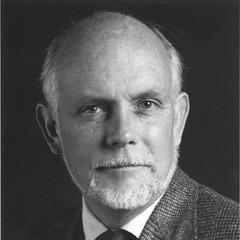
Richard Smalley (June 6, 1943 – October 28, 2005) was an American chemist who won the 1996 Nobel Prize in Chemistry for the discovery of fullerenes (C60). Born in Akron, Ohio, he earned his bachelor's degree from the University of Michigan and his Ph.D. from Princeton University. As a professor at Rice University, Smalley collaborated with Robert Curl and Harold Kroto to discover buckminsterfullerene, a new form of carbon, through laser vaporization of graphite. This breakthrough launched the field of nanoscience. Smalley later focused on nanotechnology research and advocated for science education. He died of leukemia at age 62.
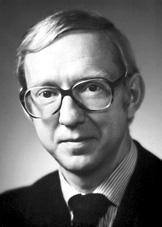
Bengt I. Samuelsson is a scientist who has made significant contributions in the unknown field. Born on May 21, 1934, his biography, achievements, and impact are limited in available information.
George Iles (1852-1942) was a renowned author from the United Kingdom. His works spanned a variety of fields, including history, literature, and philosophy. Iles was known for his in-depth research and attention to detail, and his works have had a profound impact on posterity.
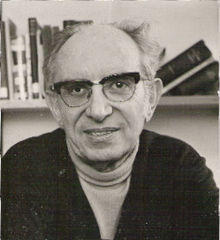
Warren Weaver was an American scientist born on July 17, 1894. He made significant contributions to the fields of information theory and computer science, particularly in applying information theory to biology and genetics. Weaver's work had a profound impact on the development of computer science and information technology.