Todd Whitaker
Todd Whitaker is a writer whose works span across various fields such as education, leadership, and personal growth. His exact birth and death dates are unknown.
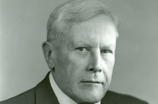
Todd Whitaker is a writer whose works span across various fields such as education, leadership, and personal growth. His exact birth and death dates are unknown.
Kenneth Stafford Norris was a remarkable figure in an unknown field. His life was filled with exploration and discovery, leaving a profound impact on future generations.

Amit Priyavadan Mehta, born in 1971, is an individual whose profession and category remain unknown. His life story and contributions are currently limited in available information.
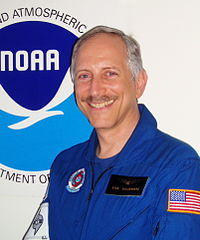
Limited information is available about Stanley B. Goldenberg.
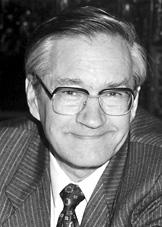
Richard Ernst, born on August 14, 1933, is a renowned chemist from Switzerland. He made groundbreaking contributions to nuclear magnetic resonance spectroscopy, particularly in the development of two-dimensional nuclear magnetic resonance spectroscopy. Ernst's research has had a profound impact on the field of chemistry, earning him the Nobel Prize in Chemistry in 1991.

Thomas Cech is an American chemist born on December 8, 1947. He won the Nobel Prize in Chemistry in 1989 for his discovery that ribonucleic acid (RNA) can act as a catalyst, a finding that challenged traditional concepts of enzymology.

Walter M. Fitch was a scholar who made contributions in an unknown field. Born on May 21, 1929, and passing away on March 10, 2011, Fitch focused on the study of identity positioning during his career. His life and achievements have had a profound impact on the academic community.
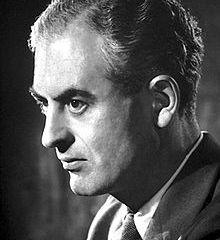
Peter Medawar was a British biologist and immunologist recognized for his work in transplantation immunology. He was awarded the Nobel Prize in Physiology or Medicine in 1960 for his discovery of immunological tolerance.
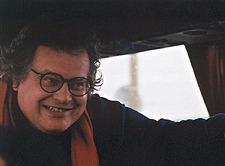
Paul Q. Hirst was an individual active between 1947 and 2003, with an unknown profession and category.
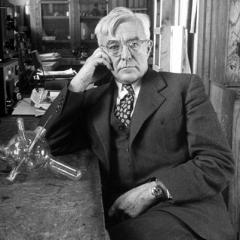
American physicist, chemist, and engineer, known for his contributions to surface chemistry, atomic theory, and electronics. He received his Bachelor of Science in Physics from Columbia University in 1903 and his Ph.D. in Philosophy in 1907. During his tenure at Bell Telephone Laboratories, Langmuir made significant contributions to surface chemistry and physical chemistry, including the formulation of the Langmuir adsorption theory. His research had a profound impact on modern industry and science.