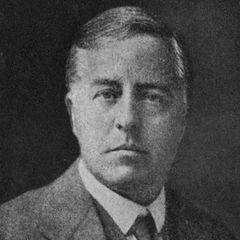
James Jeans
James Jeans was an influential British physicist known for his contributions to astrophysics and cosmology. His research encompassed stellar structure and the origins of the universe, having a profound impact on modern physics.
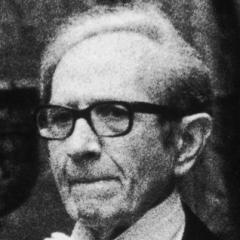
James Jeans was an influential British physicist known for his contributions to astrophysics and cosmology. His research encompassed stellar structure and the origins of the universe, having a profound impact on modern physics.

Rebecca Skloot is a freelance writer recognized for her contributions to science and medicine through her compelling storytelling and investigative journalism. Born in September 1972, she has made a significant impact in the field by focusing on the human aspect of scientific research. Skloot's writing often delves into the lives of individuals involved in significant scientific studies, bringing to light the personal stories behind groundbreaking research.
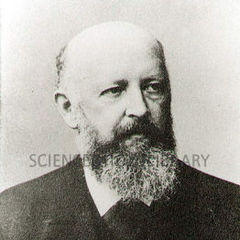
German chemist and Nobel laureate. Adolf von Baeyer made significant contributions to organic chemistry, particularly in the fields of dye chemistry and synthetic chemistry. His research involved the synthesis of various organic compounds, including aniline dyes and indigo. Baeyer's work had a profound impact on the development of modern chemistry.
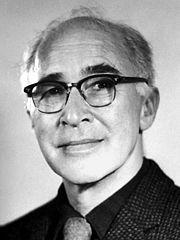
George Wald was an American biologist renowned for his research in the field of visual physiology. In the mid-20th century, his studies on retinal pigment vision significantly contributed to the understanding of human visual mechanisms. Wald was awarded the Nobel Prize in Physiology or Medicine in 1967 for his outstanding contributions to the field of visual physiology.
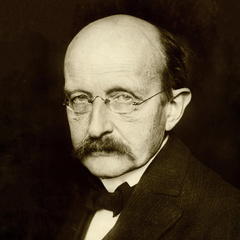
Max Planck, born on April 23, 1858 in Germany, died on October 4, 1947. He was a renowned German physicist and one of the founders of quantum theory, winning the Nobel Prize in Physics in 1918 for his discovery of Planck's constant.
Dennis Flanagan was a renowned American author known for his profound insights into the ocean and exploration. His works covered a wide range of topics, including marine biology, ocean exploration, and marine history. Flanagan's career began in marine biology research, which later led him to writing, where he became a prolific author and editor.
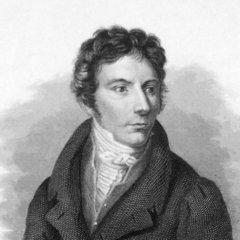
Lorenz Oken, born on August 1, 1779 and died on August 11, 1851, was a prominent German naturalist. He made significant contributions to the fields of biology, philosophy, and art.
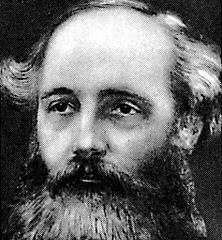
James Clerk Maxwell was an outstanding physicist known for his contributions to the field of electromagnetism. He formulated Maxwell's equations, which describe the properties of electromagnetic fields and predict the existence of electromagnetic waves. Maxwell's work has had a profound impact on modern physics and engineering.
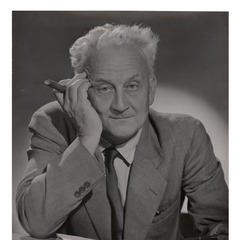
Albert Szent-Gyorgyi was a renowned physiologist born on September 16, 1893, in Hungary, and passed away on October 22, 1986. He made significant contributions to biochemistry, particularly in the study of vitamins, for which he was awarded the Nobel Prize in Physiology or Medicine in 1937.
Anthony Standen was an accomplished British author known for his profound insights into history and culture. His works covered a wide range of historical themes from the Middle Ages to the modern era, celebrated for their unique narrative style and attention to detail.