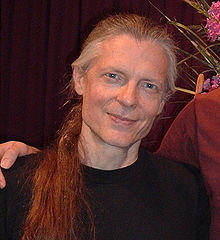
Alex Grey (b. November 29, 1953) is an American artist whose work occupies a singular position at the intersection of visionary art, spiritual imagery, anatomy, and contemporary counterculture. Best known for his meticulously rendered paintings of the human body, energy fields, and transcendental states, Grey has developed a visual language that fuses the precision of anatomical illustration with the symbolism of religious iconography and the experiential intensity of mystical practice. His art is often described as “spiritual realism,” a mode in which the visible body becomes a portal to invisible dimensions of consciousness, death, transformation, and cosmic order. Grey’s significance lies not only in his technical mastery but also in his ability to reintroduce questions of the sacred into late twentieth- and early twenty-first-century visual culture. In an art world long shaped by abstraction, conceptualism, and market-driven spectacle, he has consistently pursued themes of embodiment, transcendence, and inner awakening. His best-known works, including the Sacred Mirrors series and Sacrament, have made him a major reference point for viewers interested in art as meditation, healing, and revelation. He is also widely known through his collaborations with the musician Tool and through The Chapel of Sacred Mirrors (CoSM), the spiritual-art environment he co-founded with his wife, Allyson Grey. As an artist, Grey is celebrated for his luminous palettes, symmetrical compositions, layered anatomical sections, and mandala-like structures. As a cultural figure, he has become an influential voice in visionary art, psychedelic aesthetics, and New Age spirituality. Admired by many as a contemporary interpreter of the sacred body, and sometimes criticized for the overt symbolism of his imagery, Grey remains a central figure in the history of spiritual art in the United States.
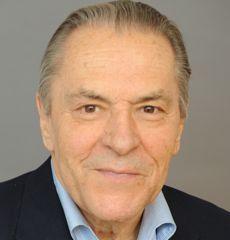
Stanislav Grof is a renowned psychiatrist and psychologist known for his work in the study of consciousness, psychotherapy, and the exploration of human potential. Born on July 1, 1931, he is a pioneer in the fields of psychodrama and consciousness research.
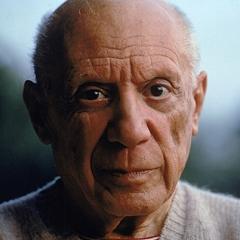
Spanish painter and one of the most influential figures in 20th-century art. Picasso is renowned for his unique artistic style and prolific career, encompassing various fields such as painting, sculpture, and printmaking. His paintings have gone through several phases, from the early Blue Period to the later Cubism, profoundly impacting 20th-century art.
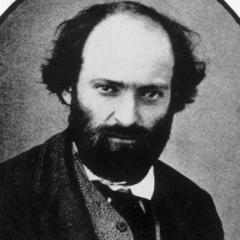
Paul Cézanne, a French Post-Impressionist painter, was born on January 19, 1839, and died on October 22, 1906. Known as the father of modern painting, his works have had a profound impact on 20th-century art.
Robert Henri was an American painter and art educator renowned for his unique artistic style and contributions to art education. His works are known for their depictions of natural and urban landscapes, emphasizing the personal expression and profound understanding of life by the artist.
German painter known for his unique artistic style and reflections on German history. Baselitz's works often blend abstract and representational elements, characterized by strong colors and bold compositions.
Thomas Hoving, born on January 15, 1931, and passed away on December 10, 2009, was a significant figure in the art world, with an unspecified profession.
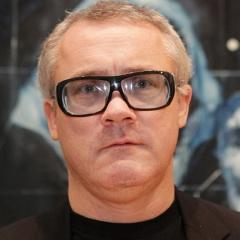
Damien Hirst is a British contemporary artist known for his influential presence in the art world. His works often deal with themes of death, life, and consumerism, characterized by vibrant colors and unique forms.
Robert Genn (May 15, 1936 – May 27, 2014) was a renowned Canadian painter, writer, and art educator. He was best known for his landscape paintings, particularly those depicting the natural beauty of Canada's West Coast. Born in Victoria, British Columbia, Genn studied commercial art before turning to fine art. He founded the Painter's Keys website, offering creative advice and community support to artists worldwide. His works are held in museums and private collections, and his artistic philosophy has influenced many contemporary painters.
Carl Andre, born on September 16, 1935, is a renowned American artist known for his minimalist style and use of industrial materials such as metal plates and bricks. His works explore the relationship between materials and space and have had a significant impact on the international art scene, being collected by numerous museums and galleries.