
Ellery Schempp
Ellery Schempp is a renowned physicist, born on August 5, 1940. He is known for his significant research contributions in the fields of quantum mechanics and particle physics.
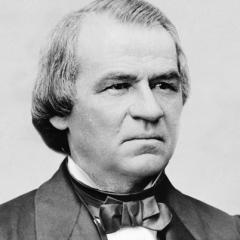
Ellery Schempp is a renowned physicist, born on August 5, 1940. He is known for his significant research contributions in the fields of quantum mechanics and particle physics.
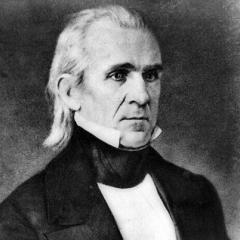
James K. Polk was the 11th President of the United States, serving from 1845 to 1849. Known for his foreign policy and the expansion of the United States' territory, he is particularly remembered for his role in the Mexican War, which significantly increased the country's land area.
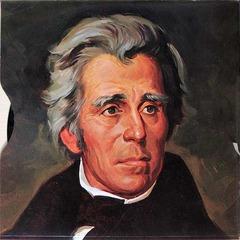
Andrew Jackson was the 7th President of the United States, born on March 15, 1767, and died on June 8, 1845. Known for his strong nationalism and democratic stance, he played a significant role in the expansion of the United States and the end of Native American resistance. During his presidency from 1829 to 1837, Jackson implemented democratic reforms, such as the abolition of the Electoral College and the promotion of westward expansion, which had a profound impact on American politics.
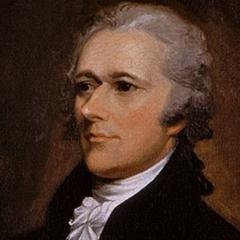
Alexander Hamilton was a Founding Father of the United States, born on January 11, 1757, and died on July 12, 1804. He played a crucial role in the American Revolutionary War and was instrumental in the drafting of the U.S. Constitution. As the first Secretary of the Treasury, Hamilton promoted fiscal stability and economic growth, establishing the First Bank of the United States and proposing solutions for federal debt. His ideas and policies had a profound impact on the early political and economic development of the United States.
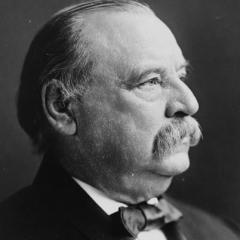
Grover Cleveland was the only U.S. President to serve two non-consecutive terms, from 1885 to 1889 and 1893 to 1897. During his presidency, he was committed to reducing government spending and balancing the budget, and he promoted various social reforms. Cleveland is known for his strong moral standards and political independence.
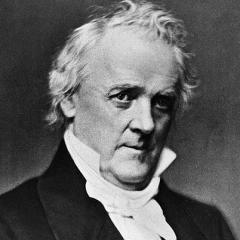
James Buchanan was the 15th President of the United States, born on April 23, 1791, and died on June 1, 1868. He served in various political roles, including as the U.S. ambassador to Russia and as the Secretary of the Treasury. Buchanan's presidency is marked by the outbreak of the Civil War, and his leadership and policy decisions have been widely criticized.
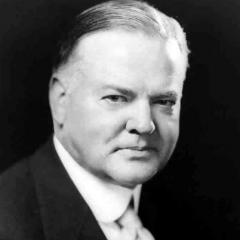
Herbert Hoover, the 31st President of the United States, was born on August 10, 1874, and died on October 20, 1964. A distinguished engineer, businessman, and philanthropist, he served as the United States Secretary of Commerce and as the Director of the United States Food Administration during World War I. As President, Hoover implemented a series of policies aimed at alleviating the Great Depression, but his approach was widely criticized.
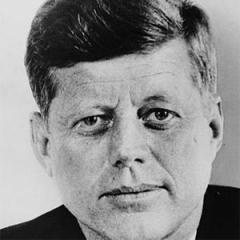
John F. Kennedy was the 35th President of the United States, serving from 1961 to 1963. His presidency was marked by the Civil Rights Act, the New Frontier policy, and the intense Cold War confrontation with the Soviet Union. Kennedy was known for his youthful charm and charisma, but his assassination during his term shocked the world.
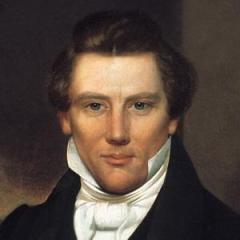
Joseph Smith, Jr. was a prominent translator, born on December 23, 1805, and died on June 27, 1844. He is known for his translation and editing of the Book of Mormon, which has had a profound impact on the development of the Mormon religion.
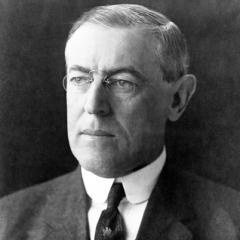
Woodrow Wilson was the 28th President of the United States, known for his foreign policy during World War I and his efforts at the Paris Peace Conference. He advocated for the New Freedom policy and had a deep academic background in history, politics, and economics.