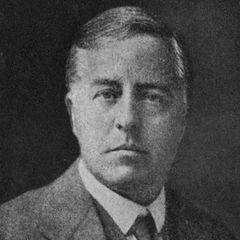
James Jeans
James Jeans was an influential British physicist known for his contributions to astrophysics and cosmology. His research encompassed stellar structure and the origins of the universe, having a profound impact on modern physics.
James Jeans was an influential British physicist known for his contributions to astrophysics and cosmology. His research encompassed stellar structure and the origins of the universe, having a profound impact on modern physics.
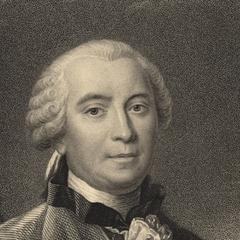
Georges-Louis Leclerc, Comte de Buffon, was a French naturalist, mathematician, and encyclopedist. He is renowned for his comprehensive work on natural history, 'Histoire naturelle, générale et particulière', which was a cornerstone of the Enlightenment.
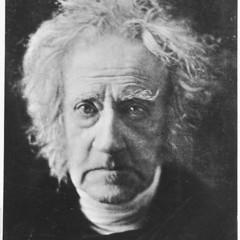
Sir John Herschel was a British astronomer, mathematician, and chemist, renowned for his contributions to astronomy and photography. He was born on March 7, 1792, and died on May 11, 1871.
W. C. Brownell was an influential journalist, born in 1851 and died in 1928. He had a profound impact on the field of journalism, known for his sharp insight and fair reporting style.
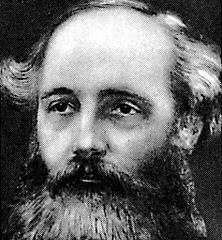
James Clerk Maxwell was an outstanding physicist known for his contributions to the field of electromagnetism. He formulated Maxwell's equations, which describe the properties of electromagnetic fields and predict the existence of electromagnetic waves. Maxwell's work has had a profound impact on modern physics and engineering.
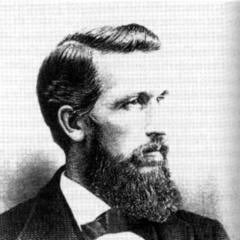
Elisha Gray was a prominent inventor born on August 2, 1835, and died on January 21, 1901. He made significant contributions to the fields of telegraphy and telephony, being one of the early inventors of the telephone.
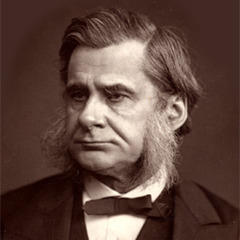
Thomas Huxley, a British biologist, was a staunch supporter of Darwin's theory of evolution. Renowned for his research in comparative anatomy, embryology, paleontology, and philosophy, Huxley made significant contributions to the field of biology. He had a profound influence on science, not only through his support of Darwin's theory of evolution but also through his role as a science popularizer and advocate for science education.
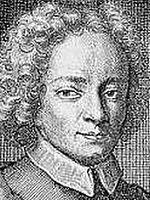
Giorgio Baglivi was an Italian physician born on September 8, 1668, and died on June 15, 1707. He made significant contributions to the field of medicine, particularly in anatomy and physiology.
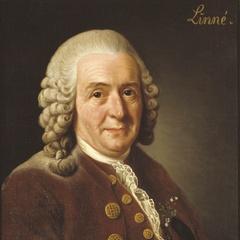
Carl Linnaeus (May 23, 1707 - January 10, 1778) was a Swedish botanist, zoologist, physician, and systematist. He is considered the father of modern biological classification and his binomial nomenclature has had a profound impact on the development of biology.
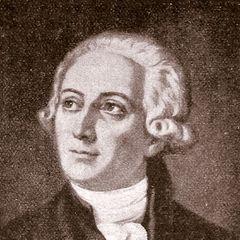
Antoine Lavoisier (August 26, 1743 – May 8, 1794) was a French chemist, widely regarded as the father of modern chemistry. He disproved the phlogiston theory through quantitative experiments, identified the role of oxygen in combustion, and named oxygen and hydrogen. Lavoisier also reformed chemical nomenclature, making chemical language systematic. His book 'Elements of Chemistry' laid the foundation of modern chemistry. However, during the French Revolution, he was executed by guillotine due to his former role as a tax collector.