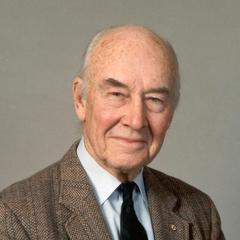
John Tuzo Wilson
John Tuzo Wilson was a renowned geologist known for his contributions to the theory of plate tectonics. Born on October 24, 1908, and passing away on April 15, 1993, his research had a profound impact on the development of geology.
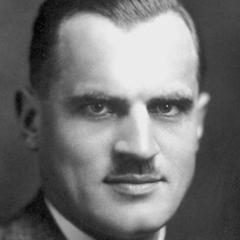
John Tuzo Wilson was a renowned geologist known for his contributions to the theory of plate tectonics. Born on October 24, 1908, and passing away on April 15, 1993, his research had a profound impact on the development of geology.
August Kekule was a German chemist renowned for his contributions to organic chemistry. His most famous achievement was the proposal of the benzene ring structure, which had a profound impact on the development of chemical structural theory.
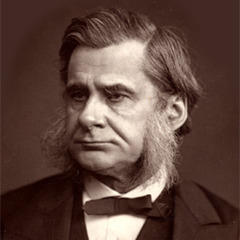
Thomas Huxley, a British biologist, was a staunch supporter of Darwin's theory of evolution. Renowned for his research in comparative anatomy, embryology, paleontology, and philosophy, Huxley made significant contributions to the field of biology. He had a profound influence on science, not only through his support of Darwin's theory of evolution but also through his role as a science popularizer and advocate for science education.
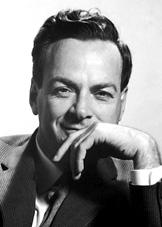
Richard P. Feynman was a renowned theoretical physicist known for his contributions to quantum mechanics and quantum electrodynamics. He was also an exceptional physicist in the field of physics education, with popular science books like 'Surely You're Joking, Mr. Feynman!' that have won the hearts of readers.
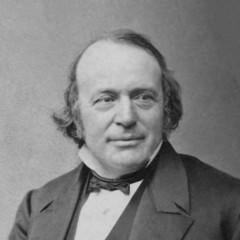
Louis Agassiz, born on May 28, 1807 in Switzerland and died on December 14, 1873 in the United States, was a renowned geologist in the 19th century. He made significant contributions to the fields of paleontology and geology.
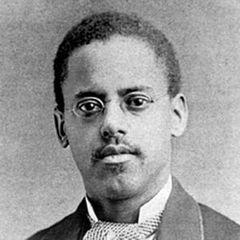
Lewis Howard Latimer was an African American inventor and engineer who made significant contributions to the development of the telegraph and the light bulb. He worked for the Edison Electric Light Company and is credited with improving the incandescent light bulb's filament. Latimer's work in the field of electrical engineering was pioneering and had a lasting impact on the industry.
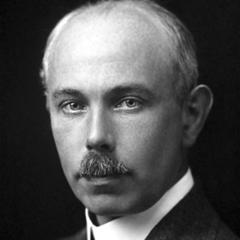
Francis William Aston was a British chemist renowned for his contributions to mass spectrometry. He won the 1922 Nobel Prize in Chemistry for inventing the mass spectrometer and using it to study isotopes. Aston's research had a profound impact on the development of chemistry and physics.
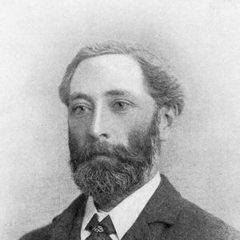
W. W. Rouse Ball was a distinguished British mathematician recognized for his work in geometry, number theory, and the history of mathematics. He held the position of professor at the University of Cambridge and authored numerous influential textbooks.
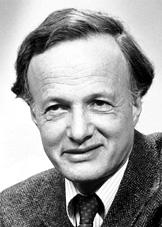
John Charles Polanyi is a renowned chemist born in Canada in 1929. He made significant contributions to the field of chemistry, particularly in the study of chemical reaction dynamics and catalysis. Polanyi was awarded the Nobel Prize in Chemistry in 1986 for his outstanding contributions to the field.
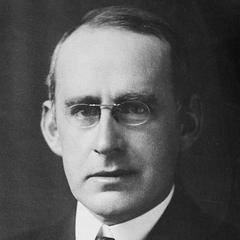
Arthur Eddington was a distinguished British astronomer recognized for his contributions to astrophysics and cosmology. He is particularly renowned for his observations during the 1919 solar eclipse, which validated Einstein's theory of general relativity. Eddington's legacy in astronomy has significantly advanced our comprehension of the cosmos.