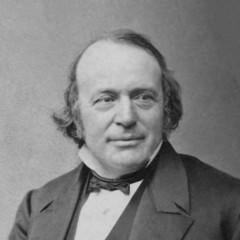
Louis Agassiz
Louis Agassiz, born on May 28, 1807 in Switzerland and died on December 14, 1873 in the United States, was a renowned geologist in the 19th century. He made significant contributions to the fields of paleontology and geology.
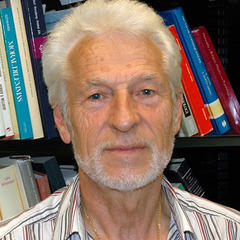
Louis Agassiz, born on May 28, 1807 in Switzerland and died on December 14, 1873 in the United States, was a renowned geologist in the 19th century. He made significant contributions to the fields of paleontology and geology.
George Julius Poulett Scrope was a prominent British geologist born on March 10, 1797, and died on January 19, 1876. He made significant contributions to the field of geology, particularly in the areas of petrology and mineralogy.
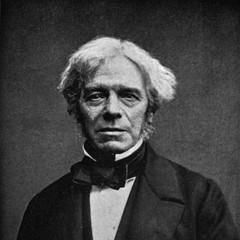
Michael Faraday was an English physicist and chemist, born on September 22, 1791, and died on August 25, 1867. He made significant contributions to the field of electromagnetism, particularly the discovery of electromagnetic induction, which had a profound impact on the development of the electric power industry and electrical engineering.
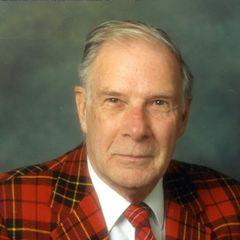
Richard Hamming was an American mathematician and information theorist, born on February 11, 1915, in Omaha, Nebraska, and passed away on January 7, 1998. He is known as the 'Father of the Information Age'. Hamming made significant contributions to mathematics, information theory, and computer science, particularly in the field of coding theory, which has had a profound impact on the development of modern communication technology.
Marie Francois Xavier Bichat was a French physician and physiologist whose research had a profound impact on modern medicine and biology.
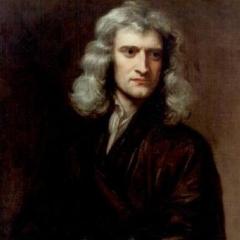
Isaac Newton was an English physicist, mathematician, and astronomer, considered one of the greatest scientists in history. He made significant contributions to physics, mathematics, and astronomy, particularly with his three laws of motion and the law of universal gravitation. Newton's work had a profound impact on the development of modern science and engineering.
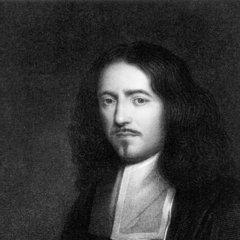
Marcello Malpighi was an Italian physician and scientist, renowned for his substantial contributions to anatomy and histology. Often hailed as the father of microscopic anatomy, he made numerous discoveries using the newly invented microscope. Malpighi's work laid the groundwork for modern histology, and his detailed studies of the body's structures and functions have had a lasting impact on medical science.
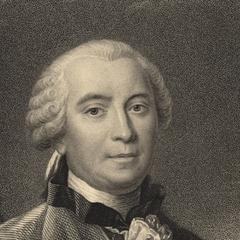
Georges-Louis Leclerc, Comte de Buffon, was a French naturalist, mathematician, and encyclopedist. He is renowned for his comprehensive work on natural history, 'Histoire naturelle, générale et particulière', which was a cornerstone of the Enlightenment.
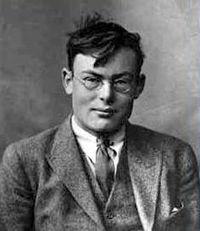
Frank P. Ramsey was a British philosopher born on February 22, 1903, and died on January 19, 1930. He made significant contributions to logic, mathematical philosophy, and probability theory.
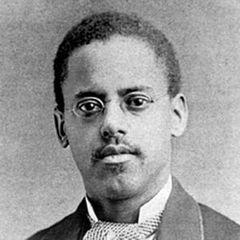
Lewis Howard Latimer was an African American inventor and engineer who made significant contributions to the development of the telegraph and the light bulb. He worked for the Edison Electric Light Company and is credited with improving the incandescent light bulb's filament. Latimer's work in the field of electrical engineering was pioneering and had a lasting impact on the industry.