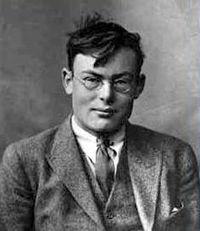
Frank P. Ramsey
Frank P. Ramsey was a British philosopher born on February 22, 1903, and died on January 19, 1930. He made significant contributions to logic, mathematical philosophy, and probability theory.
Frank P. Ramsey was a British philosopher born on February 22, 1903, and died on January 19, 1930. He made significant contributions to logic, mathematical philosophy, and probability theory.

Clifford Stoll is an American author known for his works on computer security and personal privacy. His writings often explore the impact of technology on society and the role of individuals in technological advancement.

Tim Berners-Lee, a renowned computer scientist, was born on June 8, 1955. He is credited with inventing the World Wide Web, which has had a profound impact on the development of the internet.
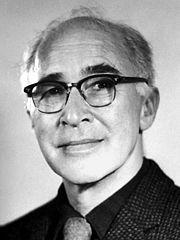
George Wald was an American biologist renowned for his research in the field of visual physiology. In the mid-20th century, his studies on retinal pigment vision significantly contributed to the understanding of human visual mechanisms. Wald was awarded the Nobel Prize in Physiology or Medicine in 1967 for his outstanding contributions to the field of visual physiology.
August Kekule was a German chemist renowned for his contributions to organic chemistry. His most famous achievement was the proposal of the benzene ring structure, which had a profound impact on the development of chemical structural theory.
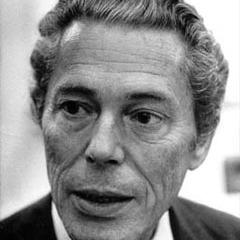
A renowned biologist and French Nobel laureate, Jacques Monod is known for his research in genetics and molecular biology. He made significant contributions to the discovery of gene regulation and the genetic code.
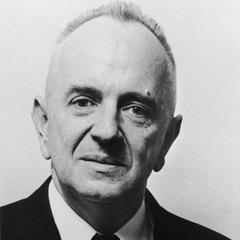
Theodosius Dobzhansky (1900-1975) was a pioneering Ukrainian-American evolutionary geneticist and one of the founding figures of the modern synthesis in evolutionary biology. His groundbreaking work "Genetics and the Origin of Species" (1937) revolutionized the integration of Mendelian genetics with Darwinian evolution. Through his research on Drosophila fruit flies, Dobzhansky demonstrated the genetic mechanisms underlying speciation and natural selection. His famous assertion that "Nothing in biology makes sense except in the light of evolution" became one of the most influential statements in science. He taught at Columbia University and the University of California, mentoring generations of geneticists and profoundly shaping 20th-century biology.
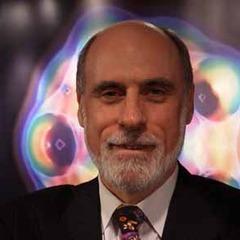
Vinton Cerf is an esteemed engineer often referred to as the 'Father of the Internet'. Born on June 23, 1943, he is a key figure in the development of internet technology. As a pioneer in the field, he co-founded the Internet Engineering Task Force (IETF). During his tenure at the Advanced Research Projects Agency (ARPA), Cerf was involved in the early design of ARPANET, which laid the groundwork for the internet. Together with Bob Kahn, he developed the TCP/IP protocol, which became the foundation for internet communication. Cerf's contributions extend beyond technology, as he has also been active in the standardization of the internet, promoting its global adoption. Recognized as a foundational figure in modern internet history, Cerf's work has had a profound impact on the way people communicate and access information worldwide.
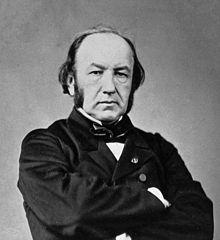
Claude Bernard was a French physiologist born on July 12, 1813, and died on February 10, 1878. He made significant contributions to the field of physiology, particularly in the study of the digestive system and the nervous system.
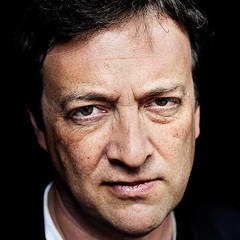
Misha Glenny is a British journalist renowned for his in-depth reporting on Eastern Europe and Russia. Born in 1958, he has been focusing on the political, economic, and social changes in the region since the early 1980s.