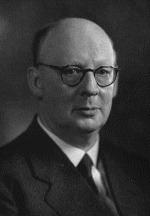
Wolfgang Ostwald
German chemist born on May 27, 1883, and died on November 22, 1943. Wolfgang Ostwald made significant contributions to the field of chemistry, particularly in colloidal chemistry and catalysis.

German chemist born on May 27, 1883, and died on November 22, 1943. Wolfgang Ostwald made significant contributions to the field of chemistry, particularly in colloidal chemistry and catalysis.
Elisee Reclus was a renowned geographer known for his in-depth research in both natural and social geography. His works covered a wide range of geographical topics, including cities, countryside, mountains, rivers, and climate. Reclus' geographical theories emphasized the interaction between humans and the environment, and had a profound impact on the development of geography.
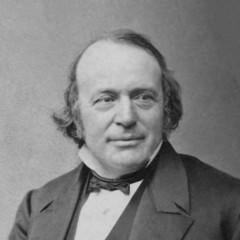
Louis Agassiz, born on May 28, 1807 in Switzerland and died on December 14, 1873 in the United States, was a renowned geologist in the 19th century. He made significant contributions to the fields of paleontology and geology.
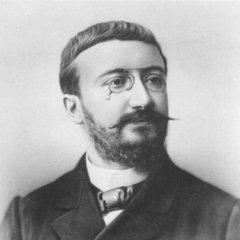
Alfred Binet was a French psychologist known for his contributions to psychology and intelligence testing. He was born on July 8, 1857, and died on October 18, 1911. Binet's work had a profound impact on modern psychology and education.
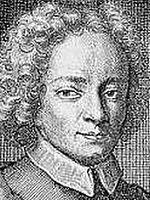
Giorgio Baglivi was an Italian physician born on September 8, 1668, and died on June 15, 1707. He made significant contributions to the field of medicine, particularly in anatomy and physiology.
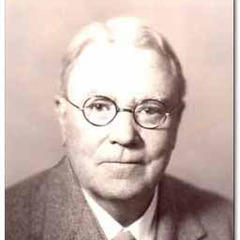
Walter Bradford Cannon was a prominent physiologist known for his research on how the nervous and endocrine systems influence physiological responses. Born on October 19, 1871, and died on the same day in 1945, Cannon completed his undergraduate and graduate studies at Harvard University, where he began his academic career. His most famous contribution was the concept of the 'fight or flight response,' which explained the unity of physiological responses in animals facing threats. Cannon's work revealed the critical role of the sympathetic nervous system and adrenaline in regulating these responses. Beyond his theoretical contributions, Cannon made significant contributions to physiological education, emphasizing the importance of experimentation and observation in his teaching methods. His influence is widely recognized, with his work profoundly impacting subsequent research in physiology and psychology, particularly in understanding the effects of stress and emotions on health.
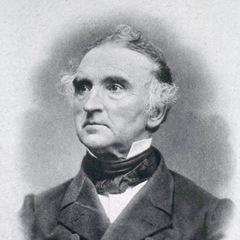
Justus von Liebig, a German chemist born on May 12, 1803, and died on April 18, 1873, is considered one of the founders of organic chemistry. He made significant contributions to the development of agricultural chemistry and food science.
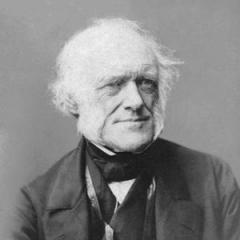
Charles Lyell, born on November 14, 1797 and died on February 22, 1875, was a renowned lawyer and geologist from the United Kingdom. He is best known for his extensive research in geology and his influential book 'Principles of Geology,' which had a profound impact on the development of the field.
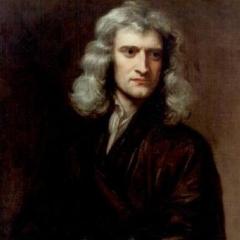
Isaac Newton was an English physicist, mathematician, and astronomer, considered one of the greatest scientists in history. He made significant contributions to physics, mathematics, and astronomy, particularly with his three laws of motion and the law of universal gravitation. Newton's work had a profound impact on the development of modern science and engineering.
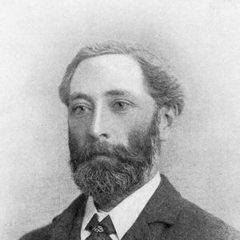
W. W. Rouse Ball was a distinguished British mathematician recognized for his work in geometry, number theory, and the history of mathematics. He held the position of professor at the University of Cambridge and authored numerous influential textbooks.