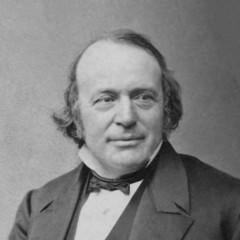
Louis Agassiz
Louis Agassiz, born on May 28, 1807 in Switzerland and died on December 14, 1873 in the United States, was a renowned geologist in the 19th century. He made significant contributions to the fields of paleontology and geology.
Louis Agassiz, born on May 28, 1807 in Switzerland and died on December 14, 1873 in the United States, was a renowned geologist in the 19th century. He made significant contributions to the fields of paleontology and geology.
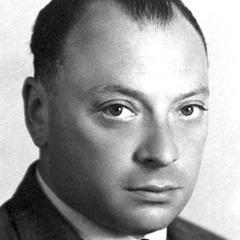
Wolfgang Pauli was a distinguished physicist born on April 25, 1900, and died on December 15, 1958. He is recognized for his substantial contributions to quantum mechanics, especially for the formulation of the Pauli exclusion principle. Pauli was awarded the Nobel Prize in Physics in 1945 for his work on the explanation of the fine structure of atomic spectra.
George Iles (1852-1942) was a renowned author from the United Kingdom. His works spanned a variety of fields, including history, literature, and philosophy. Iles was known for his in-depth research and attention to detail, and his works have had a profound impact on posterity.
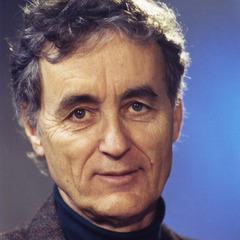
Fritjof Capra (born February 1, 1939) is an Austrian-born American physicist, systems theorist, and ecological thinker. He is best known for his 1975 book 'The Tao of Physics', which explores parallels between modern physics and Eastern mysticism. Capra advocates for deep ecology and systems thinking, integrating science, society, and ecology. His works, including 'The Turning Point' and 'The Web of Life', have influenced global environmental movements and interdisciplinary studies. He co-founded the Center for Ecoliteracy in Berkeley, California, promoting sustainable education. Capra's ideas have sparked both acclaim and criticism, but he remains a key figure in paradigm shift discourse.
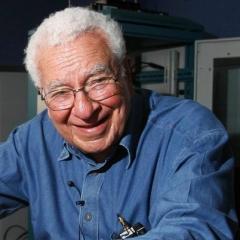
Murray Gell-Mann, born on September 15, 1929, is a renowned physicist. He made significant contributions to the field of particle physics, particularly with his proposal of the quark model, which has been crucial in understanding the structure of fundamental particles.
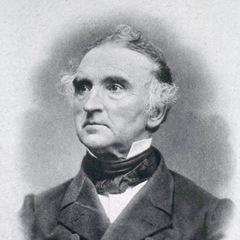
Justus von Liebig, a German chemist born on May 12, 1803, and died on April 18, 1873, is considered one of the founders of organic chemistry. He made significant contributions to the development of agricultural chemistry and food science.
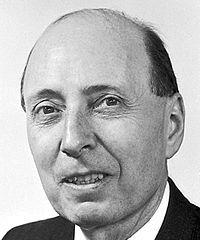
Eugene Wigner, born on November 17, 1902 in Hungary and died on January 1, 1995, was a renowned physicist known for his work in quantum mechanics, nuclear physics, and solid-state physics.
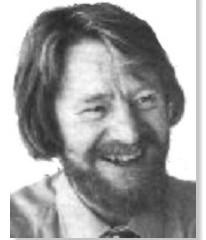
John Stewart Bell, born on June 28, 1928, and died on October 1, 1990, was a renowned physicist. He made significant contributions to the field of quantum mechanics, particularly known for his famous Bell's inequality.
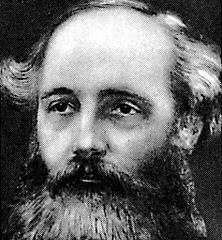
James Clerk Maxwell was an outstanding physicist known for his contributions to the field of electromagnetism. He formulated Maxwell's equations, which describe the properties of electromagnetic fields and predict the existence of electromagnetic waves. Maxwell's work has had a profound impact on modern physics and engineering.
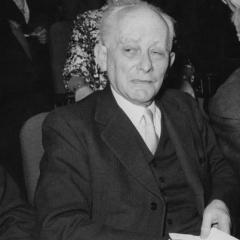
Max Born, a German physicist born on December 11, 1882 in Hamburg and died on January 5, 1970, played a significant role in the development of quantum mechanics. He is particularly known for his work on wave functions and the Schrödinger equation. Born was awarded the Nobel Prize in Physics in 1954 for his contributions to quantum mechanics.