Roger Bissiere
Roger Bissiere, an individual who made significant contributions to the field of [Occupation/Category], was born on September 22, 1886, and passed away on December 2, 1964. His life and achievements are not well-documented.
Roger Bissiere, an individual who made significant contributions to the field of [Occupation/Category], was born on September 22, 1886, and passed away on December 2, 1964. His life and achievements are not well-documented.
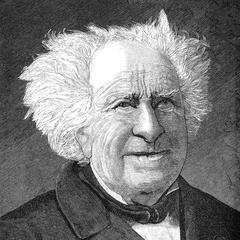
Michel Eugene Chevreul was a French chemist known for his contributions to color theory, chemical thermodynamics, and organic chemistry. He was born on August 31, 1786, and died on April 9, 1889.
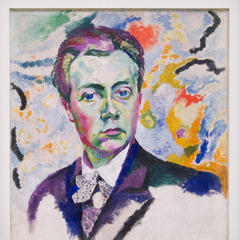
Robert Delaunay was a French artist known for his significant contributions to abstract art. His works are characterized by bold colors and geometric shapes, profoundly influencing later artists.
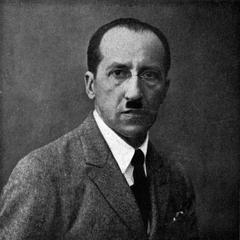
Piet Mondrian (March 7, 1872 – February 1, 1944) was a Dutch painter and a key figure in the De Stijl movement, renowned for his geometric abstract art. Initially influenced by Impressionism and Cubism, he developed Neoplasticism, a style using straight lines, right angles, and primary colors (red, yellow, blue) plus non-colors (black, white, gray). His iconic works like Composition with Red, Yellow, and Blue sought universal harmony through simplification. Mondrian's ideas profoundly impacted modern art, design, and architecture. He spent his final years in New York, creating vibrant pieces like Broadway Boogie Woogie, reflecting jazz rhythms. His legacy endures as a pioneer of abstraction, influencing fields from fashion to digital art.
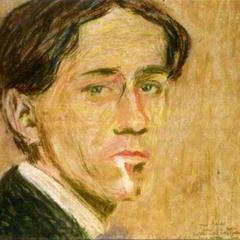
Gino Severini (April 7, 1883 – February 26, 1966) was an Italian painter and a leading figure of the Futurist movement. Known for blending Futurism with Cubism, his works often depict motion, speed, and the vitality of modern life. Born in Cortona, Italy, he moved to Rome and later settled in Paris, where he was influenced by French modern art. His masterpieces include 'Dynamic Hieroglyphic of the Bal Tabarin' and 'Portrait of a Cardinal.' Severini's career spanned decades, later shifting to abstraction and decorative arts, leaving a lasting impact on 20th-century modern art.
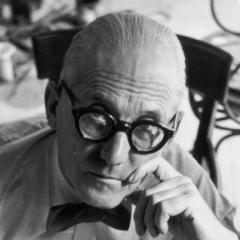
Le Corbusier, born Charles-Edouard Jeanneret, was one of the most important architects of the 20th century. His design philosophy had a profound impact on modern architecture, particularly known for his minimalist, functionalist, and modular designs. Le Corbusier's architectural works and theoretical writings, such as 'Towards a New Architecture', have had a significant influence on architects to this day.
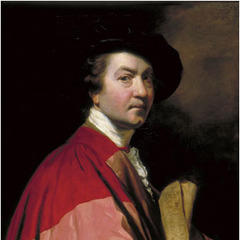
Joshua Reynolds was an influential English painter, recognized for his portraits and landscapes. Born on July 16, 1723, and passing away on February 23, 1792, Reynolds played a significant role in the development of the English portrait school and is often considered the first president of the Royal Academy of Arts.
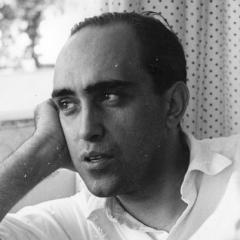
Oscar Niemeyer was a Brazilian architect known for his modernist style and unique architectural forms. Born on December 15, 1907, and passing away on December 5, 2012, Niemeyer's works are scattered across the globe. His most iconic buildings include the government buildings in Brasília and the São Paulo Cathedral.
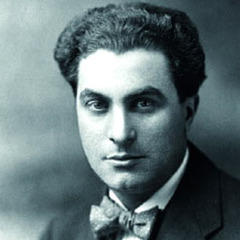
Edgard Varese was a renowned French composer known for his unique musical style and influential contributions to electronic music. His works blended various musical elements, including jazz, classical, and African music, paving the way for avant-garde electronic music.
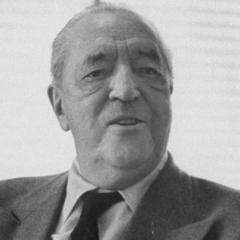
German architect and one of the most influential figures in 20th-century architecture. Ludwig Mies van der Rohe is known for his minimalist and functionalist design style, with his famous phrase 'less is more' becoming a key principle in modern architectural design. His work has had a profound impact on architects of all time.