William Coulson
William Coulson was an individual active between 1802 and 1877, with specific occupation and category information limited.
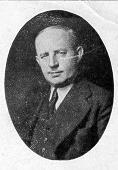
William Coulson was an individual active between 1802 and 1877, with specific occupation and category information limited.
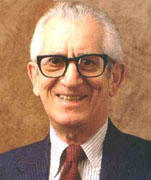
Benjamin Bloom was a renowned psychologist, born on February 21, 1913, and passed away on September 13, 1999. He made significant contributions to the field of educational psychology, particularly in the areas of cognitive goal classification and teaching evaluation.
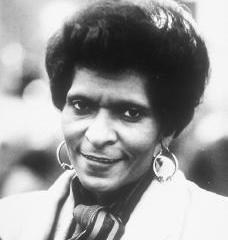
Marva Collins was an American educator known for her unique teaching methods and her dedication to educating students from impoverished backgrounds. Born on August 31, 1936, she passed away on June 24, 2015. Collins founded the Marva Collins Academy in the贫民区 of Chicago, committed to providing education for students who were considered uneducable.
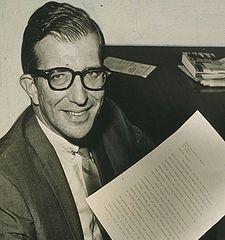
Albert Shanker was a significant figure in the field of [Occupation/Category]. Born on September 14, 1928, and passing away on February 22, 1997, Shanker made notable contributions during his lifetime. His identity as a [Occupation/Category] expert was marked by his profound knowledge and extensive practical experience. His biography is characterized by his [Life Experience], which includes significant events such as [Specific Event 1] and [Specific Event 2]. Shanker's achievements in [Achievements and Contributions] have had a profound impact on the field. His legacy is a subject of mixed opinions, with some praising him as [Opinion 1] and others critiquing him as [Opinion 2].
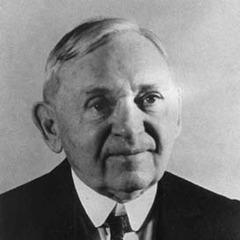
William Lowe Bryan, born on November 11, 1860, and died on November 21, 1955, was an American figure whose profession and category remain unknown. His life story, achievements, and impact are currently limited in available information.
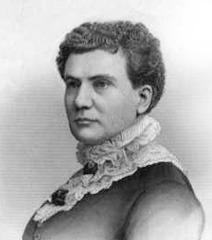
Marilla Ricker (1840-1920) was an American woman active at the end of the 19th century and the beginning of the 20th century, whose occupation and category are currently unknown. Limited information suggests that her life and work had a positive impact on the local community.
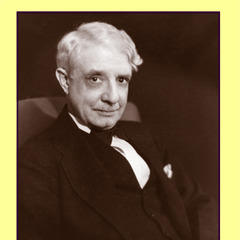
William Bagley was an American educator born on March 15, 1874, and died on July 1, 1946. He is known for his contributions to educational reform and curriculum development, particularly in the field of elementary education.
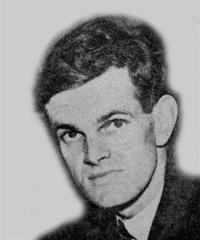
W. W. Sawyer (1911-2008) was a British mathematician, mathematics educator, and popular science writer, best known for his accessible and engaging books on mathematics. Born in England, he taught at several universities and dedicated his career to making mathematics enjoyable. His works, such as 'Mathematician's Delight,' have been translated into many languages, inspiring generations of math enthusiasts.
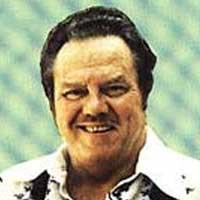
James E. Myers, an outstanding American songwriter, was born on October 26, 1919, and passed away on May 10, 2001. His works have been widely appreciated and have contributed significantly to the music industry.
Paul Popenoe, born on October 16, 1888, and died on June 19, 1979, was an American sociologist and psychologist known for his work in the field of family and marriage. As a sociologist, Popenoe earned his Ph.D. from Harvard University and later became a professor of sociology at Stanford University. His academic career had a significant impact on the study of family relationships. During his life, Popenoe conducted several social surveys, including the famous 'Parker House Family Study,' which delved into the dynamics of family relationships. His research revealed the impact of family structure, communication styles, and educational background on family happiness. Popenoe is considered a pioneer in the field of family relationship research, and his books 'The Art of Marriage' and 'Family Life' have had a profound influence on social policy. His theories and practices continue to be referenced and studied by scholars today, making a significant contribution to understanding family dynamics and promoting family well-being.