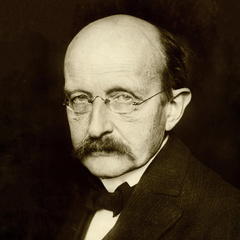
Max Planck
Max Planck, born on April 23, 1858 in Germany, died on October 4, 1947. He was a renowned German physicist and one of the founders of quantum theory, winning the Nobel Prize in Physics in 1918 for his discovery of Planck's constant.
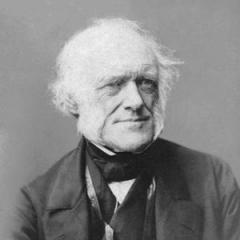
Max Planck, born on April 23, 1858 in Germany, died on October 4, 1947. He was a renowned German physicist and one of the founders of quantum theory, winning the Nobel Prize in Physics in 1918 for his discovery of Planck's constant.
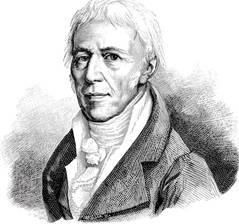
Jean-Baptiste Lamarck was a French naturalist and biologist, a key figure in the history of science. Born on August 1, 1744, in Bazentin, Oise, France, and died on December 18, 1829, in Paris, France. He is known for his contributions to the theory of evolution, particularly his theory of inheritance of acquired characteristics, which suggested that an organism could pass on traits acquired during its lifetime to its offspring. Although his theories are now considered outdated, they laid the groundwork for the modern understanding of evolution.
Anthony Standen was an accomplished British author known for his profound insights into history and culture. His works covered a wide range of historical themes from the Middle Ages to the modern era, celebrated for their unique narrative style and attention to detail.
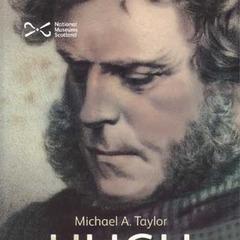
Geologist from Scotland, known for his significant contributions to the development of geology. He discovered many important fossils and authored several geological works.
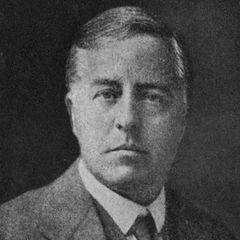
James Jeans was an influential British physicist known for his contributions to astrophysics and cosmology. His research encompassed stellar structure and the origins of the universe, having a profound impact on modern physics.
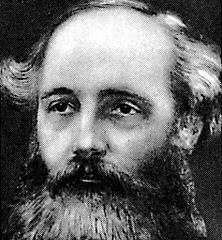
James Clerk Maxwell was an outstanding physicist known for his contributions to the field of electromagnetism. He formulated Maxwell's equations, which describe the properties of electromagnetic fields and predict the existence of electromagnetic waves. Maxwell's work has had a profound impact on modern physics and engineering.
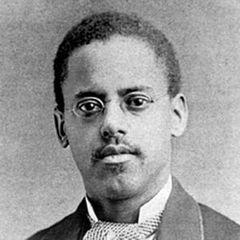
Lewis Howard Latimer was an African American inventor and engineer who made significant contributions to the development of the telegraph and the light bulb. He worked for the Edison Electric Light Company and is credited with improving the incandescent light bulb's filament. Latimer's work in the field of electrical engineering was pioneering and had a lasting impact on the industry.
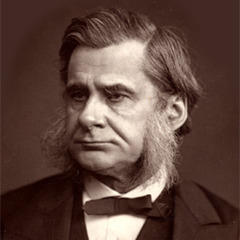
Thomas Huxley, a British biologist, was a staunch supporter of Darwin's theory of evolution. Renowned for his research in comparative anatomy, embryology, paleontology, and philosophy, Huxley made significant contributions to the field of biology. He had a profound influence on science, not only through his support of Darwin's theory of evolution but also through his role as a science popularizer and advocate for science education.
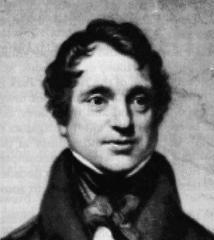
Adam Sedgwick, a renowned British geologist, was born on March 22, 1785, and passed away on January 27, 1873. He made significant contributions to the field of geology, particularly in the study of petrology and stratigraphy.
George Julius Poulett Scrope was a prominent British geologist born on March 10, 1797, and died on January 19, 1876. He made significant contributions to the field of geology, particularly in the areas of petrology and mineralogy.