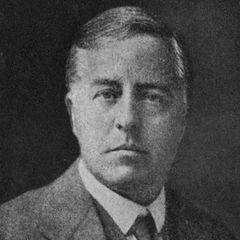
James Jeans
James Jeans was an influential British physicist known for his contributions to astrophysics and cosmology. His research encompassed stellar structure and the origins of the universe, having a profound impact on modern physics.
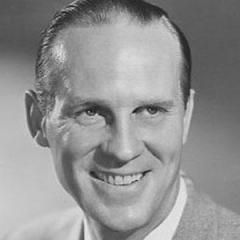
James Jeans was an influential British physicist known for his contributions to astrophysics and cosmology. His research encompassed stellar structure and the origins of the universe, having a profound impact on modern physics.
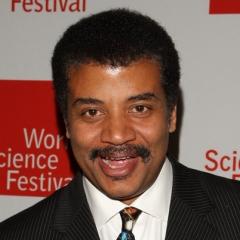
Neil deGrasse Tyson is an American astrophysicist, science communicator, and television personality. Born on October 5, 1958, he is renowned for his deep understanding of the cosmos and his ability to popularize scientific knowledge. Tyson grew up in New York City and earned a Ph.D. in astronomy from Columbia University. He served as the director of the Hayden Planetarium at the American Museum of Natural History and has been a member of various scientific committees.
George Iles (1852-1942) was a renowned author from the United Kingdom. His works spanned a variety of fields, including history, literature, and philosophy. Iles was known for his in-depth research and attention to detail, and his works have had a profound impact on posterity.
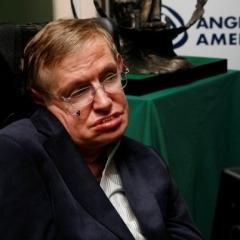
Stephen Hawking was a renowned British theoretical physicist known for his contributions to the fields of black hole theory and cosmology. Born on January 8, 1942, he overcame the challenges of ALS to become a global icon of science and perseverance.
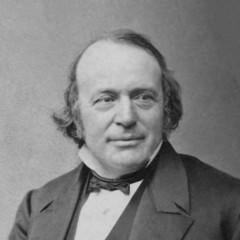
Louis Agassiz, born on May 28, 1807 in Switzerland and died on December 14, 1873 in the United States, was a renowned geologist in the 19th century. He made significant contributions to the fields of paleontology and geology.
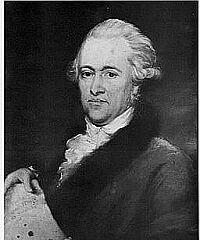
William Herschel was a prominent British astronomer known for his significant contributions to the field. He discovered the planet Uranus and conducted extensive research on the composition of stars and planets. Herschel also made notable advancements in the manufacturing of optical instruments, inventing the Herschel telescope.
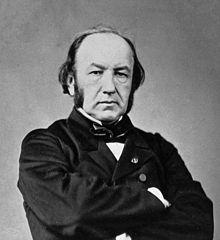
Claude Bernard was a French physiologist born on July 12, 1813, and died on February 10, 1878. He made significant contributions to the field of physiology, particularly in the study of the digestive system and the nervous system.
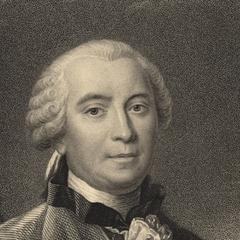
Georges-Louis Leclerc, Comte de Buffon, was a French naturalist, mathematician, and encyclopedist. He is renowned for his comprehensive work on natural history, 'Histoire naturelle, générale et particulière', which was a cornerstone of the Enlightenment.
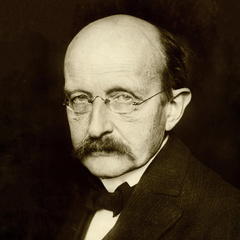
Max Planck, born on April 23, 1858 in Germany, died on October 4, 1947. He was a renowned German physicist and one of the founders of quantum theory, winning the Nobel Prize in Physics in 1918 for his discovery of Planck's constant.
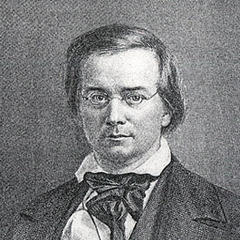
George Perkins Marsh was an American writer, politician, and naturalist. His work, 'Man and Nature,' is considered a pioneering text in environmental ethics and had a profound impact on the environmental movement that followed.