J. Arthur Thomson
J. Arthur Thomson was a British author born in 1861 and died on February 12, 1933. His works spanned across novels, poetry, and drama, known for his unique literary style and profound emotional expression.
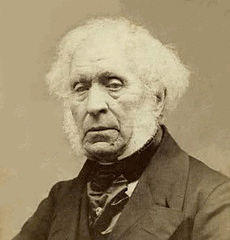
J. Arthur Thomson was a British author born in 1861 and died on February 12, 1933. His works spanned across novels, poetry, and drama, known for his unique literary style and profound emotional expression.
Anthony Standen was an accomplished British author known for his profound insights into history and culture. His works covered a wide range of historical themes from the Middle Ages to the modern era, celebrated for their unique narrative style and attention to detail.
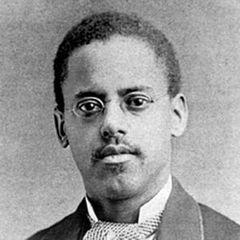
Lewis Howard Latimer was an African American inventor and engineer who made significant contributions to the development of the telegraph and the light bulb. He worked for the Edison Electric Light Company and is credited with improving the incandescent light bulb's filament. Latimer's work in the field of electrical engineering was pioneering and had a lasting impact on the industry.
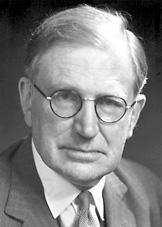
Nevill Francis Mott was a distinguished physicist recognized for his pivotal contributions to solid-state physics. Born on September 30, 1905, and passing away on August 8, 1996, Mott's research delved into the electronic properties of materials, leading to groundbreaking insights into the behavior of electrons within solids.
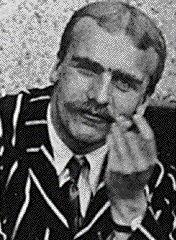
John B. S. Haldane was an outstanding biologist known for his contributions to genetics, evolutionary theory, and biochemistry. His research had a profound impact on the development of modern biology.
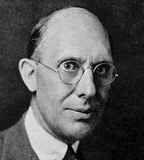
Charles Kettering, born on August 29, 1876 and died on November 25, 1958, was an American inventor and engineer renowned for his innovations in the automotive and electrical industries.
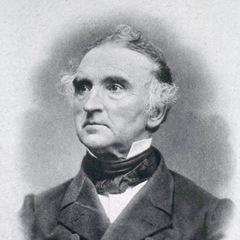
Justus von Liebig, a German chemist born on May 12, 1803, and died on April 18, 1873, is considered one of the founders of organic chemistry. He made significant contributions to the development of agricultural chemistry and food science.
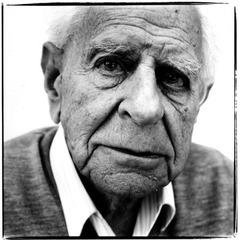
Karl Popper (July 28, 1902 – September 17, 1994) was an influential philosopher known for his work on critical rationalism and falsificationism. He is renowned for his contributions to the philosophy of science, political philosophy, and epistemology, with his ideas having a profound impact on these fields.
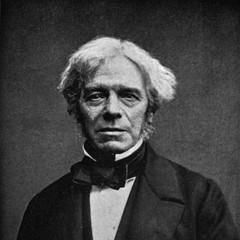
Michael Faraday was an English physicist and chemist, born on September 22, 1791, and died on August 25, 1867. He made significant contributions to the field of electromagnetism, particularly the discovery of electromagnetic induction, which had a profound impact on the development of the electric power industry and electrical engineering.
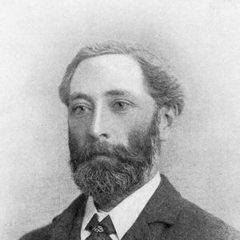
W. W. Rouse Ball was a distinguished British mathematician recognized for his work in geometry, number theory, and the history of mathematics. He held the position of professor at the University of Cambridge and authored numerous influential textbooks.