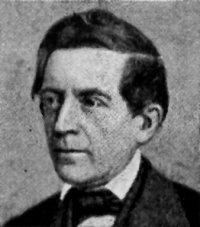
The life of Jesus critically examined A source page for quotes linked to David Friedrich Strauss. 0 quotes
The Life of Jesus: Critically Examined A source page for quotes linked to David Friedrich Strauss. 0 quotes
The life of Jesus critically examined /... A source page for quotes linked to David Friedrich Strauss. 0 quotes
“Kant bases upon the fact, that in all religions old and new which are partly comprised in sacred books, intelligent and well-meaning teachers of the people have continued to explain them, until they have brought their actual contents into agreement with the universal principles of morality. Thus did the moral philosophers amongst the Greeks and Romans with their fabulous legends; till at last they explained the grossest polytheism as mere symbolical representations of the attributes of the one divine Being, and gave a mystical sense to the many vicious actions of their gods, [...] in order to bring the popular faith, which it was not expedient to destroy, into agreement with the doctrines of morality. The later Judaism and Christianity itself he thinks have been formed upon similar explanations, occasionally much forced, but always directed to objects undoubtedly good and necessary for all men. Thus the Mahometans gave a spiritual meaning to the sensual descriptions of their paradise, and thus the Hindoos, [...] interpreted their Vedas. In like manner, [...] the Christian Scriptures of the Old and New Testament, must be interpreted throughout in a sense which agrees with the universal practical laws of a religion of pure reason” ReasonPhilosophyReligionChristianityInterpretationKant Book:The life of Jesus critically examined / by Dr. David Friedrich Strauss. Tr. from the 4th German ed. by George Eliot. 1913 [Leather Bound] Source: The life of Jesus critically examined / by Dr. David Friedrich Strauss. Tr. from the 4th German ed. by George Eliot. 1913 [Leather Bound]
“If there be a mind that, not perceiving in the narratives we have compared the fingermarks of tradition, and hence the legendary character of these evangelical anecdotes, still leans to the historical interpretation, whether natural or supernatural; that mind must be alike ignorant of the true character both of legend and of history, of the natural and the supernatural.” IfsMindStillsCharacterNaturalAtheismTraditionHistoricalPositive AtheismIgnorantNarrativeInterpretationLegendsEvangelicalLegendaryAnecdotesTrue Character Book:The life of Jesus critically examined Source: The life of Jesus critically examined
“The designation of the locality in one excludes the appearances narrated by the rest; the determination of time in another leaves no space for the narratives of his fellow-evangelists; the enumeration of a third is given without any regard to the events reported by his predecessors; lastly, among several appearances recounted by various narrators, each claims to be the last, and yet has nothing in common with the others. Hence nothing but wilful blindness can prevent the perception that no one of the narrators knew and presupposed what another records.” LastsGivenSpaceCommonRecordsAtheismEventsPerceptionDeterminationThirdsClaimsRegardFellowsVariousAppearancePositive AtheismNarrativeBlindnessPredecessorsNarratorsEvangelistsLocalityDesignation Author:David Friedrich Strauss
“The supernatural birth of Christ, his miracles, his resurrection and ascension, remain eternal truths, whatever doubts may be cast on their reality as historical facts.” MayFactsRealityChristDoubtBirthEternalMiracleHistoricalCastsChristmasResurrectionAscensionHistorical Facts Book:The Life of Jesus: Critically Examined Source: The Life of Jesus: Critically Examined
“...centre of the centre, the real heart of Christianity as it has been until now.” HeartHas BeensRealChristianityCentreEasterReal Heart Author:David Friedrich Strauss
“If God and man are in themselves one, and if religion is the human side of this unity then must this unity be made evident to man in religion, and become in him consciousness and reality.” IfsMenHumansMadeRealityReligionSidesConsciousnessUnityEvident Book:The life of Jesus critically examined Source: The life of Jesus critically examined
“For productive collaboration adopt five principles: involve the relevant stakeholders, build consensus phase by phase, design a process map, designate a process facilitator and harness the power of group memory.” ProcessMemoriesPrinciplesFiveGroupsDesignProductiveMapsCollaborationRelevantPhasesConsensusHarnessStakeholder Author:David Friedrich Strauss