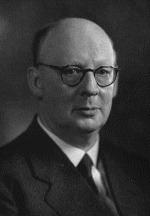
Wolfgang Ostwald
German chemist born on May 27, 1883, and died on November 22, 1943. Wolfgang Ostwald made significant contributions to the field of chemistry, particularly in colloidal chemistry and catalysis.
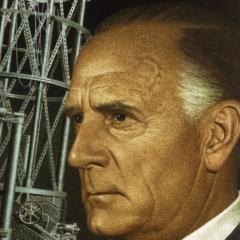
German chemist born on May 27, 1883, and died on November 22, 1943. Wolfgang Ostwald made significant contributions to the field of chemistry, particularly in colloidal chemistry and catalysis.
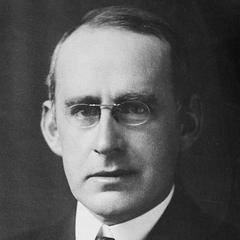
Arthur Eddington was a distinguished British astronomer recognized for his contributions to astrophysics and cosmology. He is particularly renowned for his observations during the 1919 solar eclipse, which validated Einstein's theory of general relativity. Eddington's legacy in astronomy has significantly advanced our comprehension of the cosmos.
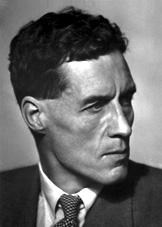
Physicist, Chairman of the British Atomic Energy Authority, Nobel Prize in Physics winner, made significant contributions to nuclear physics and quantum mechanics.
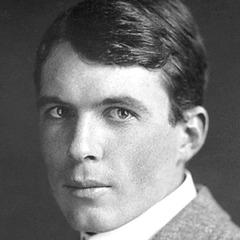
William Lawrence Bragg, a British physicist, was born on March 31, 1890, in Adelaide, Australia, and died on July 1, 1971, in Cambridge, England. He was jointly awarded the Nobel Prize in Physics in 1915 for his contributions to X-ray crystallography.
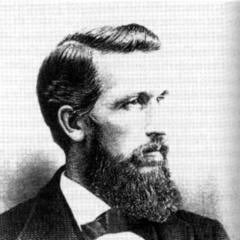
Elisha Gray was a prominent inventor born on August 2, 1835, and died on January 21, 1901. He made significant contributions to the fields of telegraphy and telephony, being one of the early inventors of the telephone.
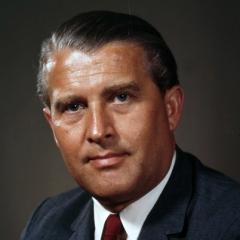
German rocket scientist known as the 'Father of Rocketry'. Wernher von Braun worked for Nazi Germany during World War II and continued his rocket research in the United States after the war, making significant contributions to human space exploration.
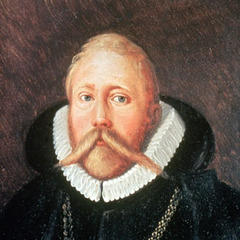
A Danish nobleman and astronomer, known for his precise astronomical observations and instrument inventions. He founded the Tycho Brahe Observatory and had a profound impact on the development of astronomy.
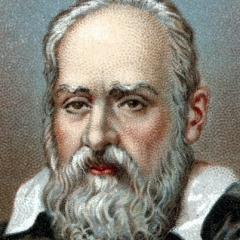
Galileo Galilei, an Italian physicist, astronomer, mathematician, and philosopher, is considered the father of modern science. He was born on February 15, 1564, and died on January 8, 1642. Galileo made significant contributions to the fields of physics, astronomy, mathematics, and philosophy. He discovered the four moons of Jupiter through his telescope, supporting Copernicus' heliocentric model, and proposed the law of free fall and other scientific theories.
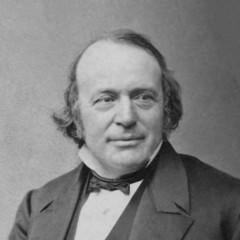
Louis Agassiz, born on May 28, 1807 in Switzerland and died on December 14, 1873 in the United States, was a renowned geologist in the 19th century. He made significant contributions to the fields of paleontology and geology.
Giorgio Baglivi was an Italian physician born on September 8, 1668, and died on June 15, 1707. He made significant contributions to the field of medicine, particularly in anatomy and physiology.