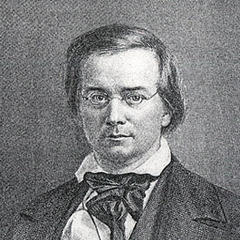
George Perkins Marsh
George Perkins Marsh was an American writer, politician, and naturalist. His work, 'Man and Nature,' is considered a pioneering text in environmental ethics and had a profound impact on the environmental movement that followed.
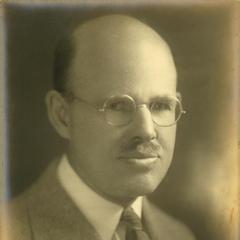
George Perkins Marsh was an American writer, politician, and naturalist. His work, 'Man and Nature,' is considered a pioneering text in environmental ethics and had a profound impact on the environmental movement that followed.
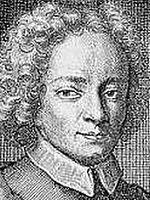
Giorgio Baglivi was an Italian physician born on September 8, 1668, and died on June 15, 1707. He made significant contributions to the field of medicine, particularly in anatomy and physiology.
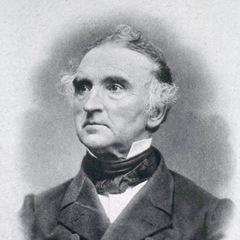
Justus von Liebig, a German chemist born on May 12, 1803, and died on April 18, 1873, is considered one of the founders of organic chemistry. He made significant contributions to the development of agricultural chemistry and food science.
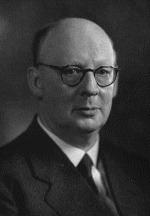
German chemist born on May 27, 1883, and died on November 22, 1943. Wolfgang Ostwald made significant contributions to the field of chemistry, particularly in colloidal chemistry and catalysis.
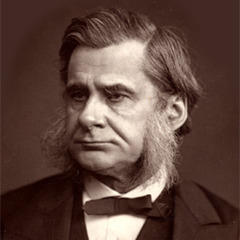
Thomas Huxley, a British biologist, was a staunch supporter of Darwin's theory of evolution. Renowned for his research in comparative anatomy, embryology, paleontology, and philosophy, Huxley made significant contributions to the field of biology. He had a profound influence on science, not only through his support of Darwin's theory of evolution but also through his role as a science popularizer and advocate for science education.
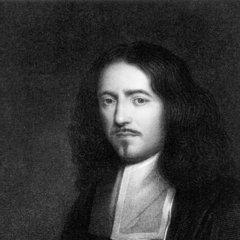
Marcello Malpighi was an Italian physician and scientist, renowned for his substantial contributions to anatomy and histology. Often hailed as the father of microscopic anatomy, he made numerous discoveries using the newly invented microscope. Malpighi's work laid the groundwork for modern histology, and his detailed studies of the body's structures and functions have had a lasting impact on medical science.
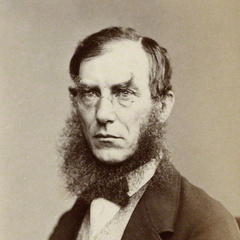
Joseph Dalton Hooker was a British botanist born on June 30, 1817, and died on December 10, 1911. He is renowned for his contributions to plant taxonomy and plant geography, serving as the director of the Royal Botanic Gardens, Kew, and participating in several scientific expeditions.
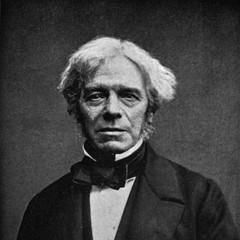
Michael Faraday was an English physicist and chemist, born on September 22, 1791, and died on August 25, 1867. He made significant contributions to the field of electromagnetism, particularly the discovery of electromagnetic induction, which had a profound impact on the development of the electric power industry and electrical engineering.
George Julius Poulett Scrope was a prominent British geologist born on March 10, 1797, and died on January 19, 1876. He made significant contributions to the field of geology, particularly in the areas of petrology and mineralogy.
J. Arthur Thomson was a British author born in 1861 and died on February 12, 1933. His works spanned across novels, poetry, and drama, known for his unique literary style and profound emotional expression.