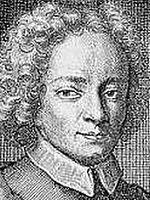
Giorgio Baglivi
Giorgio Baglivi was an Italian physician born on September 8, 1668, and died on June 15, 1707. He made significant contributions to the field of medicine, particularly in anatomy and physiology.
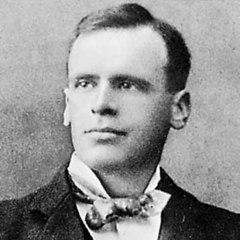
Giorgio Baglivi was an Italian physician born on September 8, 1668, and died on June 15, 1707. He made significant contributions to the field of medicine, particularly in anatomy and physiology.
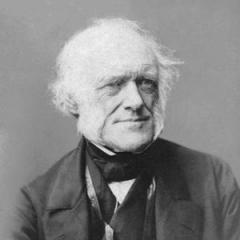
Charles Lyell, born on November 14, 1797 and died on February 22, 1875, was a renowned lawyer and geologist from the United Kingdom. He is best known for his extensive research in geology and his influential book 'Principles of Geology,' which had a profound impact on the development of the field.
François Arago was a prominent French politician, astronomer, and mathematician. Born on February 26, 1786, and died on October 2, 1853, he was active during the French Revolution and later served as a counselor to Napoleon I. Arago made significant contributions to astronomy, particularly in his study of the dark spots on the moon's surface.
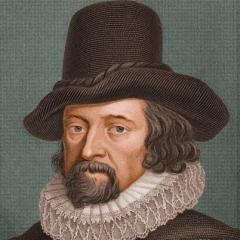
Francis Bacon, a renowned philosopher, politician, and writer, served as the Lord Chancellor of England. He is best known for his profound philosophical thoughts and extensive literary works, which have had a lasting impact on the world.
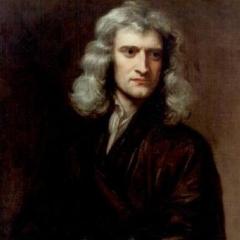
Isaac Newton was an English physicist, mathematician, and astronomer, considered one of the greatest scientists in history. He made significant contributions to physics, mathematics, and astronomy, particularly with his three laws of motion and the law of universal gravitation. Newton's work had a profound impact on the development of modern science and engineering.
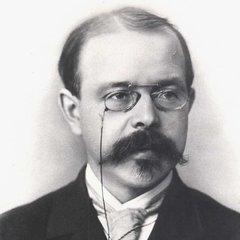
German chemist born on June 25, 1864, and died on November 18, 1941. Walther Nernst made significant contributions to thermodynamics and electrochemistry, particularly in the study of chemical potential and the third law of thermodynamics. His work had a profound impact on the development of chemistry and physics.
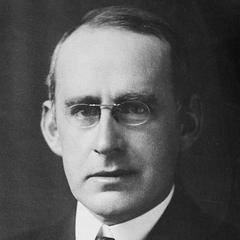
Arthur Eddington was a distinguished British astronomer recognized for his contributions to astrophysics and cosmology. He is particularly renowned for his observations during the 1919 solar eclipse, which validated Einstein's theory of general relativity. Eddington's legacy in astronomy has significantly advanced our comprehension of the cosmos.
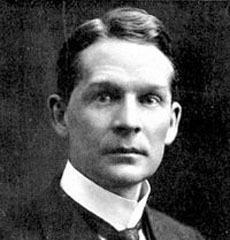
Frederick Soddy was a British chemist renowned for his contributions to the study of radioactive elements. He won the Nobel Prize in Chemistry in 1903 for his discovery of isotopes, becoming the first Briton to receive the award. Soddy's research had a profound impact on understanding atomic structure and the processes of radioactive decay.
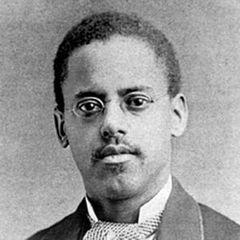
Lewis Howard Latimer was an African American inventor and engineer who made significant contributions to the development of the telegraph and the light bulb. He worked for the Edison Electric Light Company and is credited with improving the incandescent light bulb's filament. Latimer's work in the field of electrical engineering was pioneering and had a lasting impact on the industry.
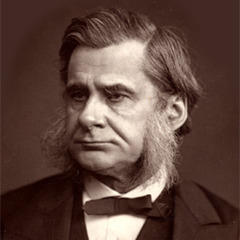
Thomas Huxley, a British biologist, was a staunch supporter of Darwin's theory of evolution. Renowned for his research in comparative anatomy, embryology, paleontology, and philosophy, Huxley made significant contributions to the field of biology. He had a profound influence on science, not only through his support of Darwin's theory of evolution but also through his role as a science popularizer and advocate for science education.