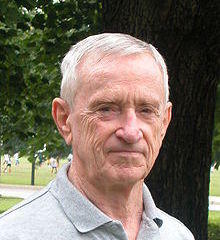
Robert L. Park
Robert L. Park is an individual of an unknown profession or category, born on January 16, 1931.
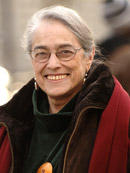
Robert L. Park is an individual of an unknown profession or category, born on January 16, 1931.
Anthony Standen was an accomplished British author known for his profound insights into history and culture. His works covered a wide range of historical themes from the Middle Ages to the modern era, celebrated for their unique narrative style and attention to detail.
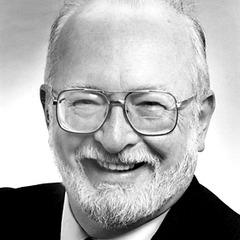
Paul Lauterbur (May 6, 1929 – March 27, 2007) was an American chemist known for his pioneering work in magnetic resonance imaging (MRI). He invented a method using gradient magnetic fields to spatially encode NMR signals, laying the foundation for MRI technology. Lauterbur shared the 2003 Nobel Prize in Physiology or Medicine with Peter Mansfield for their contributions to medical imaging. Born in Sidney, Ohio, he studied at Case Western Reserve University and earned his Ph.D. from the University of Pittsburgh. He spent most of his career at the University of Illinois at Urbana-Champaign. His work revolutionized medical diagnostics, enabling non-invasive, high-resolution imaging of internal organs. Lauterbur's legacy continues to save millions of lives worldwide.
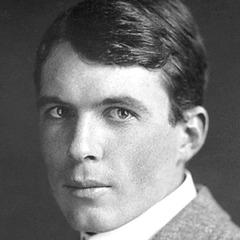
William Lawrence Bragg, a British physicist, was born on March 31, 1890, in Adelaide, Australia, and died on July 1, 1971, in Cambridge, England. He was jointly awarded the Nobel Prize in Physics in 1915 for his contributions to X-ray crystallography.
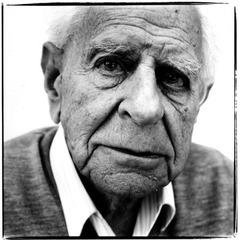
Karl Popper (July 28, 1902 – September 17, 1994) was an influential philosopher known for his work on critical rationalism and falsificationism. He is renowned for his contributions to the philosophy of science, political philosophy, and epistemology, with his ideas having a profound impact on these fields.
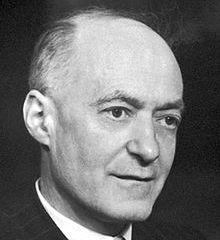
Cyril Norman Hinshelwood was an outstanding chemist known for his contributions to dynamical theory, catalysis, and atmospheric chemistry. He was born on June 19, 1897, and passed away on October 9, 1967.
Francis Darwin was a British botanist recognized for his contributions to plant physiology and genetics. As the son of the famous naturalist Charles Darwin, he followed in his father's footsteps in scientific inquiry. His research focused on the inheritance of traits in plants, significantly advancing the understanding of plant genetics and evolutionary biology.
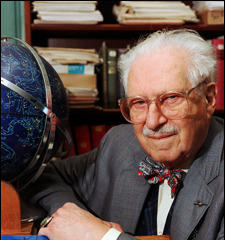
I. Bernard Cohen was a prominent American historian of science and philosopher of science. His research focused on the Scientific Revolution and the history of science, particularly known for his work on Galileo. Cohen's contributions have had a profound impact on the fields of philosophy of science and the history of science.
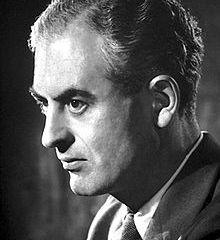
Peter Medawar was a British biologist and immunologist recognized for his work in transplantation immunology. He was awarded the Nobel Prize in Physiology or Medicine in 1960 for his discovery of immunological tolerance.
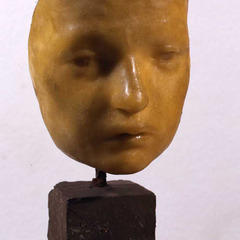
Giacomo Manzu was an Italian sculptor renowned for his innovative and expressive sculptures. Born on December 22, 1908, in Recanati, Italy, he dedicated his life to exploring the human form and its emotional depth through his art. Manzu's work is distinguished by a unique fusion of modernist and neoclassical elements, and he is regarded as one of the most influential sculptors of the 20th century. He passed away on January 17, 1991.