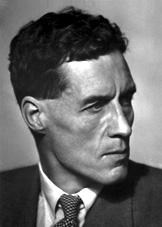
Patrick Blackett, Baron Blackett
Physicist, Chairman of the British Atomic Energy Authority, Nobel Prize in Physics winner, made significant contributions to nuclear physics and quantum mechanics.
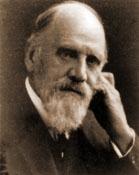
Physicist, Chairman of the British Atomic Energy Authority, Nobel Prize in Physics winner, made significant contributions to nuclear physics and quantum mechanics.
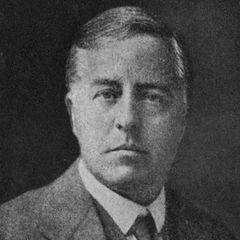
James Jeans was an influential British physicist known for his contributions to astrophysics and cosmology. His research encompassed stellar structure and the origins of the universe, having a profound impact on modern physics.
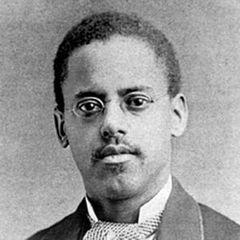
Lewis Howard Latimer was an African American inventor and engineer who made significant contributions to the development of the telegraph and the light bulb. He worked for the Edison Electric Light Company and is credited with improving the incandescent light bulb's filament. Latimer's work in the field of electrical engineering was pioneering and had a lasting impact on the industry.
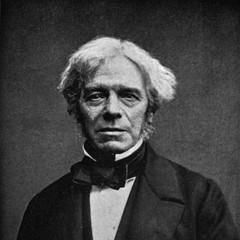
Michael Faraday was an English physicist and chemist, born on September 22, 1791, and died on August 25, 1867. He made significant contributions to the field of electromagnetism, particularly the discovery of electromagnetic induction, which had a profound impact on the development of the electric power industry and electrical engineering.
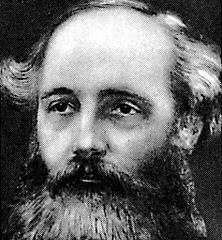
James Clerk Maxwell was an outstanding physicist known for his contributions to the field of electromagnetism. He formulated Maxwell's equations, which describe the properties of electromagnetic fields and predict the existence of electromagnetic waves. Maxwell's work has had a profound impact on modern physics and engineering.
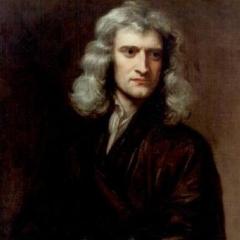
Isaac Newton was an English physicist, mathematician, and astronomer, considered one of the greatest scientists in history. He made significant contributions to physics, mathematics, and astronomy, particularly with his three laws of motion and the law of universal gravitation. Newton's work had a profound impact on the development of modern science and engineering.
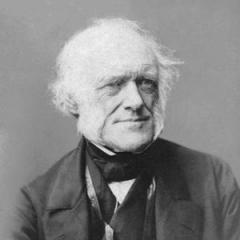
Charles Lyell, born on November 14, 1797 and died on February 22, 1875, was a renowned lawyer and geologist from the United Kingdom. He is best known for his extensive research in geology and his influential book 'Principles of Geology,' which had a profound impact on the development of the field.
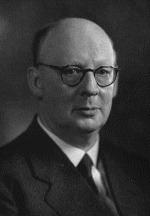
German chemist born on May 27, 1883, and died on November 22, 1943. Wolfgang Ostwald made significant contributions to the field of chemistry, particularly in colloidal chemistry and catalysis.
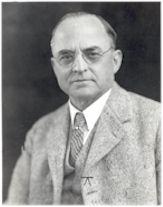
Willis R. Whitney was an outstanding chemist known for his contributions to the field of organic chemistry. He was born on August 11, 1868, and passed away on January 9, 1958. Whitney played a significant role in the development of the chemical industry, particularly in the synthesis of dyes and drugs.
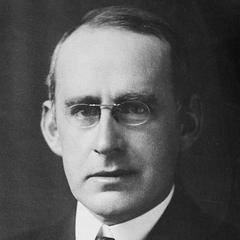
Arthur Eddington was a distinguished British astronomer recognized for his contributions to astrophysics and cosmology. He is particularly renowned for his observations during the 1919 solar eclipse, which validated Einstein's theory of general relativity. Eddington's legacy in astronomy has significantly advanced our comprehension of the cosmos.