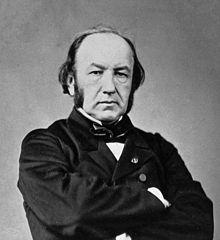
Claude Bernard
Claude Bernard was a French physiologist born on July 12, 1813, and died on February 10, 1878. He made significant contributions to the field of physiology, particularly in the study of the digestive system and the nervous system.
Claude Bernard was a French physiologist born on July 12, 1813, and died on February 10, 1878. He made significant contributions to the field of physiology, particularly in the study of the digestive system and the nervous system.
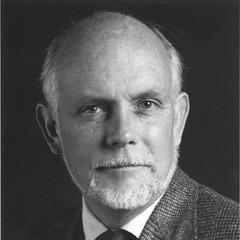
Richard Smalley (June 6, 1943 – October 28, 2005) was an American chemist who won the 1996 Nobel Prize in Chemistry for the discovery of fullerenes (C60). Born in Akron, Ohio, he earned his bachelor's degree from the University of Michigan and his Ph.D. from Princeton University. As a professor at Rice University, Smalley collaborated with Robert Curl and Harold Kroto to discover buckminsterfullerene, a new form of carbon, through laser vaporization of graphite. This breakthrough launched the field of nanoscience. Smalley later focused on nanotechnology research and advocated for science education. He died of leukemia at age 62.
George Iles (1852-1942) was a renowned author from the United Kingdom. His works spanned a variety of fields, including history, literature, and philosophy. Iles was known for his in-depth research and attention to detail, and his works have had a profound impact on posterity.
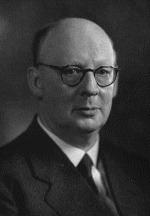
German chemist born on May 27, 1883, and died on November 22, 1943. Wolfgang Ostwald made significant contributions to the field of chemistry, particularly in colloidal chemistry and catalysis.
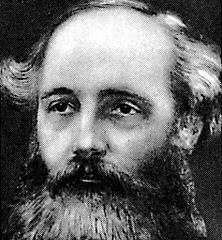
James Clerk Maxwell was an outstanding physicist known for his contributions to the field of electromagnetism. He formulated Maxwell's equations, which describe the properties of electromagnetic fields and predict the existence of electromagnetic waves. Maxwell's work has had a profound impact on modern physics and engineering.
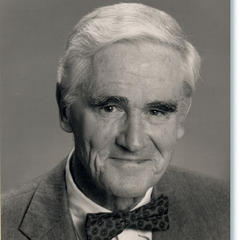
Donald Cram was a renowned chemist known for his significant contributions to organic chemistry. He was born on April 22, 1919, in Chicago, Illinois, USA, and throughout his academic career, he achieved numerous important milestones. Cram's research focused on the synthesis of cyclic compounds and the theory of stereochemistry, which laid a solid foundation for the development of organic chemistry. In 1987, he was awarded the Nobel Prize in Chemistry for his work in these areas.
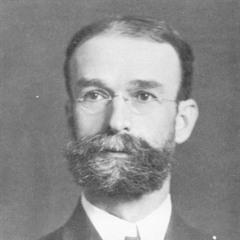
Theobald Smith, born on July 31, 1859, and died on December 10, 1934, was a renowned medical doctor. He made significant contributions to the field of medicine, particularly in the study and treatment of parasitic diseases.
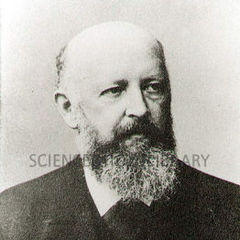
German chemist and Nobel laureate. Adolf von Baeyer made significant contributions to organic chemistry, particularly in the fields of dye chemistry and synthetic chemistry. His research involved the synthesis of various organic compounds, including aniline dyes and indigo. Baeyer's work had a profound impact on the development of modern chemistry.
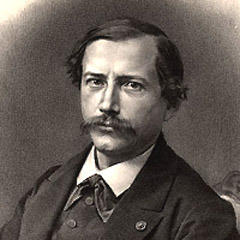
Marcellin Berthelot, a prominent French chemist, was born on October 25, 1827, in Paris, France, and passed away on March 18, 1907. He was a pioneer in the field of chemical industry and made significant contributions to the fields of chemical thermodynamics and organic chemistry.
Jons Jacob Berzelius was a Swedish chemist who made significant contributions to the development of chemistry. He is known for his work on atomic weights, chemical symbols, and the development of the modern system of chemical nomenclature. Berzelius also played a crucial role in the advancement of analytical chemistry and the study of organic chemistry.