
Nathan Seiberg
Nathan Seiberg is a renowned physicist known for his work in string theory and quantum field theory. Born on September 22, 1956, he has had a significant impact in the field of theoretical physics.
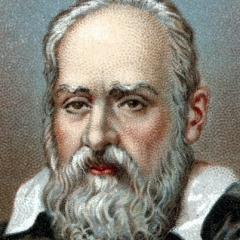
Nathan Seiberg is a renowned physicist known for his work in string theory and quantum field theory. Born on September 22, 1956, he has had a significant impact in the field of theoretical physics.
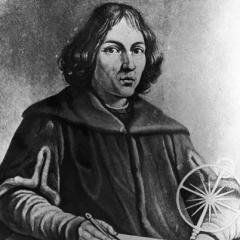
Nicolaus Copernicus (February 19, 1473 - May 24, 1543) was a Renaissance astronomer, mathematician, and Catholic priest. He is known for his work on the heliocentric model of the solar system, which laid the foundation for modern astronomy and had a profound impact on the Scientific Revolution.
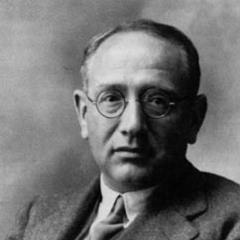
George Polya was a renowned mathematician known for his contributions to combinatorics, graph theory, and mathematics education. His research emphasized intuition and heuristic methods, which have had a profound impact on mathematicians and educators of later generations.
George Iles (1852-1942) was a renowned author from the United Kingdom. His works spanned a variety of fields, including history, literature, and philosophy. Iles was known for his in-depth research and attention to detail, and his works have had a profound impact on posterity.
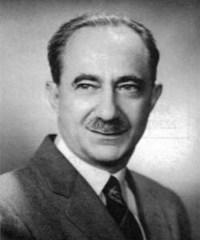
Morris Kline was a renowned mathematician, known for his contributions to mathematics education, the history of mathematics, and the philosophy of mathematics. His influence on the reform of mathematics education in the mid-20th century was profound, and he authored numerous popular mathematics textbooks.
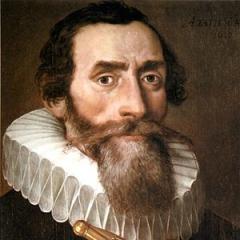
Johannes Kepler was a German astronomer, mathematician, and physicist, renowned for his research on the laws of planetary motion. He formulated the famous Kepler's laws, which describe the regularities of planetary orbits around the sun. Kepler's work had a profound impact on the development of astronomy and physics.
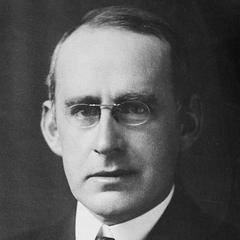
Arthur Eddington was a distinguished British astronomer recognized for his contributions to astrophysics and cosmology. He is particularly renowned for his observations during the 1919 solar eclipse, which validated Einstein's theory of general relativity. Eddington's legacy in astronomy has significantly advanced our comprehension of the cosmos.
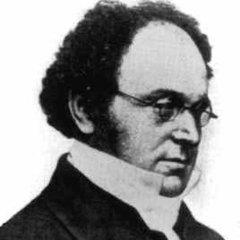
Augustus De Morgan was a distinguished British mathematician recognized for his contributions to algebra and logic. Born on June 27, 1806, and passing away on March 18, 1871, De Morgan's work laid the groundwork for modern symbolic logic and he is also renowned for his research in number theory and mathematical analysis.
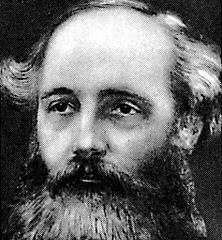
James Clerk Maxwell was an outstanding physicist known for his contributions to the field of electromagnetism. He formulated Maxwell's equations, which describe the properties of electromagnetic fields and predict the existence of electromagnetic waves. Maxwell's work has had a profound impact on modern physics and engineering.
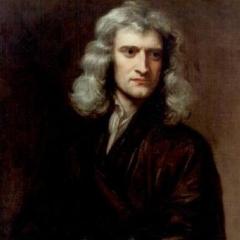
Isaac Newton was an English physicist, mathematician, and astronomer, considered one of the greatest scientists in history. He made significant contributions to physics, mathematics, and astronomy, particularly with his three laws of motion and the law of universal gravitation. Newton's work had a profound impact on the development of modern science and engineering.