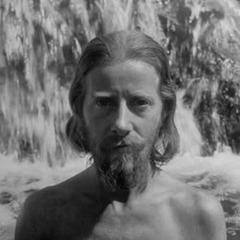
Eden Ahbez
Eden Ahbez was an influential American composer known for his unique musical style and his love for a natural lifestyle. His most famous work, 'Nature Boy,' became a classic in the history of popular music.
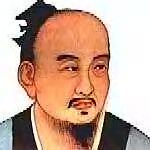
Eden Ahbez was an influential American composer known for his unique musical style and his love for a natural lifestyle. His most famous work, 'Nature Boy,' became a classic in the history of popular music.
Paul P. Enns is a prominent pastor born on June 17, 1937. He has made significant contributions to the religious field through his deep biblical studies and pastoral practices.
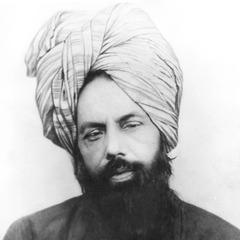
Mirza Ghulam Ahmad, born on February 13, 1835, and died on May 26, 1908, was a prominent seer and mystic from India. He claimed to be the Promised Messiah and the Mahdi, and founded the Ahmadiyya Muslim Community, which emphasizes peace, religious unity, and the spirit of scientific inquiry.
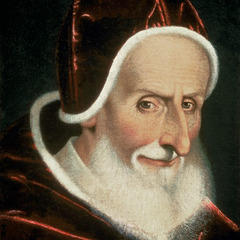
Pope Pius V, born Michel Perignon, was the 231st Pope of the Roman Catholic Church, serving from 1566 to 1572. He was born on January 17, 1504, and died on May 1, 1572. During his papacy, Pope Pius V implemented a series of religious reforms, including the restoration of the celibacy of the clergy, strengthening the power of the papacy, and opposing heretical ideas.
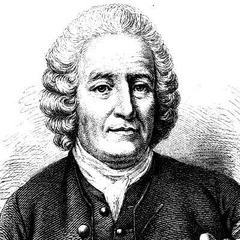
Emanuel Swedenborg was a Swedish scientist, philosopher, and theologian. Born on January 29, 1688, and died on March 29, 1772. The surname 'Swedenborg' is derived from the Swedish word 'borg', meaning 'castle', hence his name can be translated as 'Manuel of the Castle'. Swedenborg made significant contributions to science, particularly in the fields of chemistry, mineralogy, and electricity. His ideas had a profound impact on later science and philosophy.
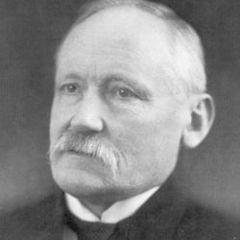
Jan Jakob Maria de Groot, born on February 18, 1854, and died on September 24, 1921, was a scholar whose identity remains unknown. His life, achievements, and impact are currently limited in available information.
John Fletcher Moulton, Baron Moulton, was a prominent British mathematician born on November 18, 1844, and died on March 9, 1921. He made significant contributions to the fields of algebraic geometry and number theory.
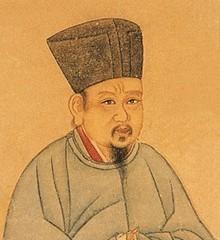
Zhang Zai, a renowned philosopher of the Northern Song Dynasty, is one of the founders of Neo-Confucianism. He proposed the concept of 'qi', which he believed to be the fundamental substance of the universe, and had a materialist tendency. Zhang Zai's philosophical thoughts have had a profound impact on later generations, and he is respectfully known as 'Mr. Hengqu'.
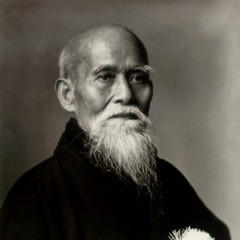
Morihei Ueshiba, born on December 14, 1883, was a renowned Japanese martial artist and the founder of aikido. His aikido, a martial art that emphasizes harmony and defense, has had a profound impact on the world. Ueshiba's life was marked by his passion for martial arts and his continuous pursuit of improvement. He passed away on April 26, 1969, but his teachings and contributions to the martial arts continue to inspire many to this day.
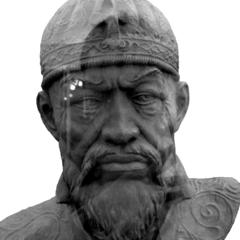
Timur, also known as Tamerlane, was a Turco-Mongol military leader and the founder of the Timurid Empire. Born in April 1336, he was a prominent figure in Central Asia and the Middle East. Timur's military campaigns expanded his empire across the Islamic world, making him one of the most successful conquerors in history. He died on February 18, 1405.