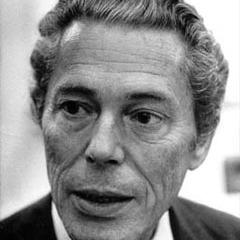
Jacques Monod
A renowned biologist and French Nobel laureate, Jacques Monod is known for his research in genetics and molecular biology. He made significant contributions to the discovery of gene regulation and the genetic code.
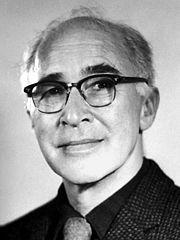
A renowned biologist and French Nobel laureate, Jacques Monod is known for his research in genetics and molecular biology. He made significant contributions to the discovery of gene regulation and the genetic code.
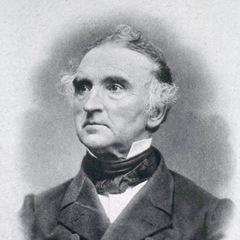
Justus von Liebig, a German chemist born on May 12, 1803, and died on April 18, 1873, is considered one of the founders of organic chemistry. He made significant contributions to the development of agricultural chemistry and food science.
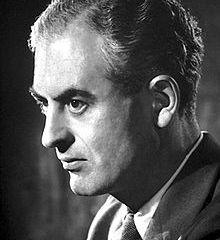
Peter Medawar was a British biologist and immunologist recognized for his work in transplantation immunology. He was awarded the Nobel Prize in Physiology or Medicine in 1960 for his discovery of immunological tolerance.
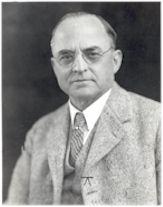
Willis R. Whitney was an outstanding chemist known for his contributions to the field of organic chemistry. He was born on August 11, 1868, and passed away on January 9, 1958. Whitney played a significant role in the development of the chemical industry, particularly in the synthesis of dyes and drugs.
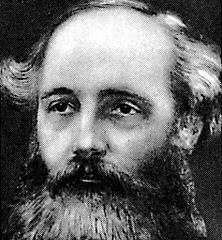
James Clerk Maxwell was an outstanding physicist known for his contributions to the field of electromagnetism. He formulated Maxwell's equations, which describe the properties of electromagnetic fields and predict the existence of electromagnetic waves. Maxwell's work has had a profound impact on modern physics and engineering.
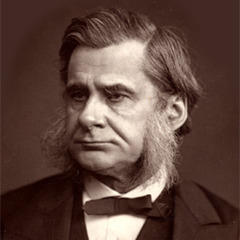
Thomas Huxley, a British biologist, was a staunch supporter of Darwin's theory of evolution. Renowned for his research in comparative anatomy, embryology, paleontology, and philosophy, Huxley made significant contributions to the field of biology. He had a profound influence on science, not only through his support of Darwin's theory of evolution but also through his role as a science popularizer and advocate for science education.
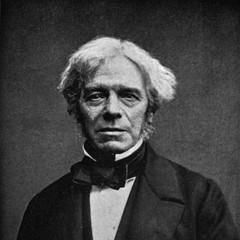
Michael Faraday was an English physicist and chemist, born on September 22, 1791, and died on August 25, 1867. He made significant contributions to the field of electromagnetism, particularly the discovery of electromagnetic induction, which had a profound impact on the development of the electric power industry and electrical engineering.
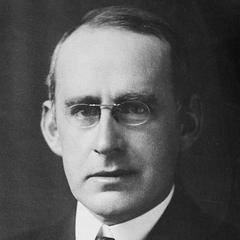
Arthur Eddington was a distinguished British astronomer recognized for his contributions to astrophysics and cosmology. He is particularly renowned for his observations during the 1919 solar eclipse, which validated Einstein's theory of general relativity. Eddington's legacy in astronomy has significantly advanced our comprehension of the cosmos.
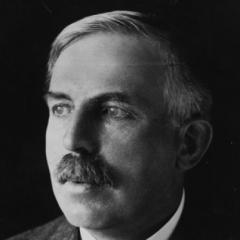
Ernest Rutherford, a British physicist, is renowned as the founder of nuclear physics. Born on August 30, 1871, in New Zealand, he passed away on October 19, 1937, in the United Kingdom. Rutherford made significant breakthroughs in the study of radioactivity, proposed the nuclear model of the atom, and discovered the proton.
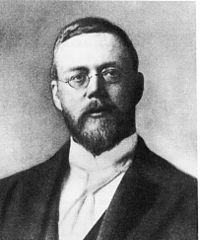
Reginald Fessenden was a prominent inventor who made significant contributions to the field of radio communication. He was born on October 6, 1866, and died on July 22, 1932. Fessenden achieved breakthroughs in wireless power transmission, radio telegraphy, and wireless music transmission.