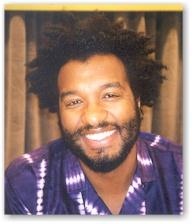
Colin Channer
Colin Channer, born in 1963, is an American writer whose works span various literary genres, including novels, poetry, and drama. Channer is known for his unique narrative style and profound insights into Southern American culture.
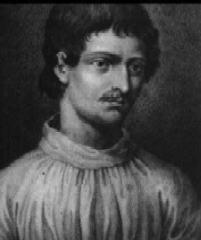
Colin Channer, born in 1963, is an American writer whose works span various literary genres, including novels, poetry, and drama. Channer is known for his unique narrative style and profound insights into Southern American culture.
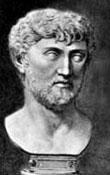
Lucretius (99 BC - 55 BC) was a renowned Greek Roman poet, hailed as the peak of Greek Roman philosophical poetry. His work 'On the Nature of Things' presented the natural philosophical ideas of the Greek philosopher Democritus in poetic form, which had a profound impact on later generations.
Metrodorus of Chios was a philosopher from ancient Greece, whose birth and death dates are unknown. His status in the history of philosophy is unclear, and his specific life and contributions are not well-documented.
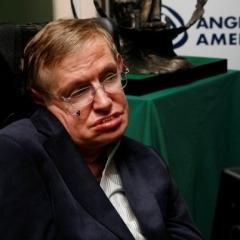
Stephen Hawking was a renowned British theoretical physicist known for his contributions to the fields of black hole theory and cosmology. Born on January 8, 1942, he overcame the challenges of ALS to become a global icon of science and perseverance.
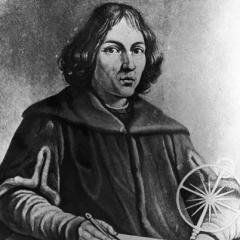
Nicolaus Copernicus (February 19, 1473 - May 24, 1543) was a Renaissance astronomer, mathematician, and Catholic priest. He is known for his work on the heliocentric model of the solar system, which laid the foundation for modern astronomy and had a profound impact on the Scientific Revolution.
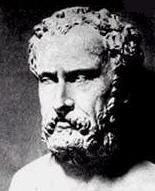
Xenophanes, a Greek philosopher born around 570 BC in the Greek colony of Colophon and died around 476 BC, is considered one of the pioneers of Western philosophy. He is known for his profound thoughts on nature and the universe. Xenophanes emphasized the unity and infinity of the universe and proposed unique views on the nature of gods and humans.
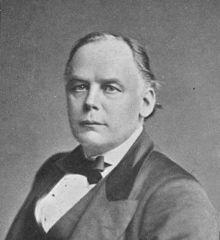
Charles Bradlaugh, a British politician born on September 26, 1833, and died on January 30, 1891, was a prominent atheist and liberal. He served as a Member of Parliament, advocating for social reforms and the promotion of education.
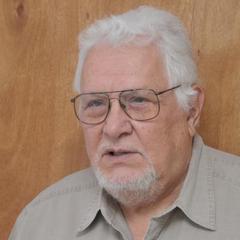
Victor J. Stenger was a renowned physicist known for his research in the philosophy of science and criticism of religion. His work encompasses physics, mathematics, and logic, particularly in the fields of quantum mechanics and cosmology. Stenger's writings aim to popularize scientific knowledge and challenge the rationality of religious beliefs.
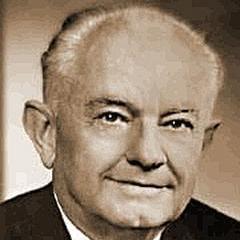
Ernest Holmes was a renowned writer, born on January 21, 1887, and passed away on April 7, 1960. His works covered a range of fields including philosophy, religion, and self-help, which were well-received by readers.
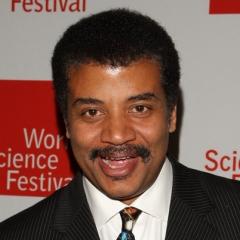
Neil deGrasse Tyson is an American astrophysicist, science communicator, and television personality. Born on October 5, 1958, he is renowned for his deep understanding of the cosmos and his ability to popularize scientific knowledge. Tyson grew up in New York City and earned a Ph.D. in astronomy from Columbia University. He served as the director of the Hayden Planetarium at the American Museum of Natural History and has been a member of various scientific committees.