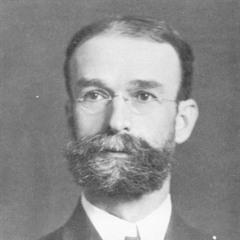
Theobald Smith
Theobald Smith, born on July 31, 1859, and died on December 10, 1934, was a renowned medical doctor. He made significant contributions to the field of medicine, particularly in the study and treatment of parasitic diseases.
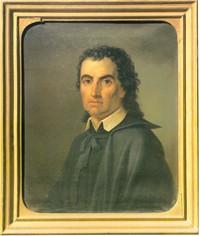
Theobald Smith, born on July 31, 1859, and died on December 10, 1934, was a renowned medical doctor. He made significant contributions to the field of medicine, particularly in the study and treatment of parasitic diseases.
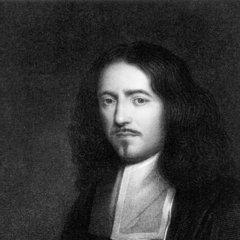
Marcello Malpighi was an Italian physician and scientist, renowned for his substantial contributions to anatomy and histology. Often hailed as the father of microscopic anatomy, he made numerous discoveries using the newly invented microscope. Malpighi's work laid the groundwork for modern histology, and his detailed studies of the body's structures and functions have had a lasting impact on medical science.
François Arago was a prominent French politician, astronomer, and mathematician. Born on February 26, 1786, and died on October 2, 1853, he was active during the French Revolution and later served as a counselor to Napoleon I. Arago made significant contributions to astronomy, particularly in his study of the dark spots on the moon's surface.
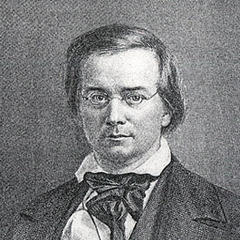
George Perkins Marsh was an American writer, politician, and naturalist. His work, 'Man and Nature,' is considered a pioneering text in environmental ethics and had a profound impact on the environmental movement that followed.
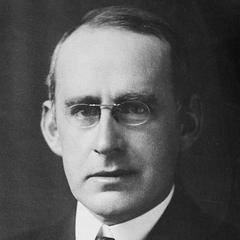
Arthur Eddington was a distinguished British astronomer recognized for his contributions to astrophysics and cosmology. He is particularly renowned for his observations during the 1919 solar eclipse, which validated Einstein's theory of general relativity. Eddington's legacy in astronomy has significantly advanced our comprehension of the cosmos.
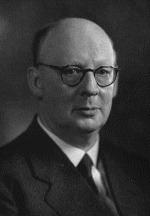
German chemist born on May 27, 1883, and died on November 22, 1943. Wolfgang Ostwald made significant contributions to the field of chemistry, particularly in colloidal chemistry and catalysis.
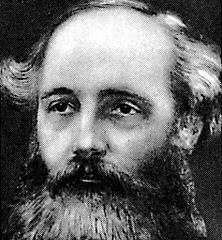
James Clerk Maxwell was an outstanding physicist known for his contributions to the field of electromagnetism. He formulated Maxwell's equations, which describe the properties of electromagnetic fields and predict the existence of electromagnetic waves. Maxwell's work has had a profound impact on modern physics and engineering.
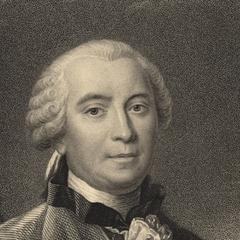
Georges-Louis Leclerc, Comte de Buffon, was a French naturalist, mathematician, and encyclopedist. He is renowned for his comprehensive work on natural history, 'Histoire naturelle, générale et particulière', which was a cornerstone of the Enlightenment.
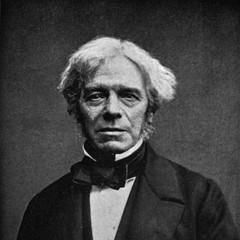
Michael Faraday was an English physicist and chemist, born on September 22, 1791, and died on August 25, 1867. He made significant contributions to the field of electromagnetism, particularly the discovery of electromagnetic induction, which had a profound impact on the development of the electric power industry and electrical engineering.
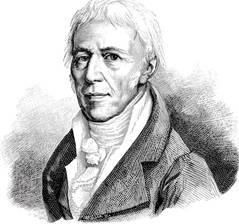
Jean-Baptiste Lamarck was a French naturalist and biologist, a key figure in the history of science. Born on August 1, 1744, in Bazentin, Oise, France, and died on December 18, 1829, in Paris, France. He is known for his contributions to the theory of evolution, particularly his theory of inheritance of acquired characteristics, which suggested that an organism could pass on traits acquired during its lifetime to its offspring. Although his theories are now considered outdated, they laid the groundwork for the modern understanding of evolution.