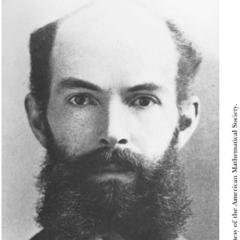
William Fogg Osgood
William Fogg Osgood was an American mathematician known for his contributions to mathematical analysis, number theory, and mathematical physics. His academic status and influence reached a peak in the early 20th century.
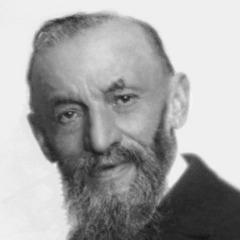
William Fogg Osgood was an American mathematician known for his contributions to mathematical analysis, number theory, and mathematical physics. His academic status and influence reached a peak in the early 20th century.
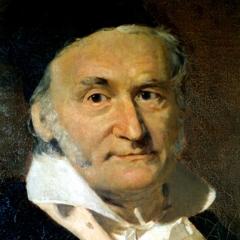
Carl Friedrich Gauss (April 30, 1777 - February 23, 1855) was a German mathematician who is widely regarded as one of the greatest mathematicians of all time. He made significant contributions to mathematics, physics, and astronomy.
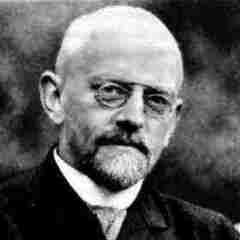
David Hilbert, a German mathematician born on January 23, 1862, and died on February 14, 1943, was one of the greatest mathematicians of the 20th century. He is renowned for his contributions to the foundations of mathematics, geometry, number theory, and functional analysis.
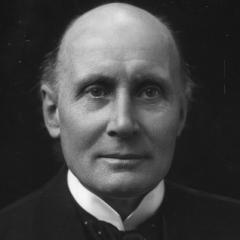
Alfred North Whitehead was a British mathematician, philosopher, born on February 15, 1861, and died on December 30, 1947. He is known for his contributions to mathematics, logic, philosophy, and the philosophy of science, particularly for his co-authorship of 'Principia Mathematica' with Bertrand Russell.
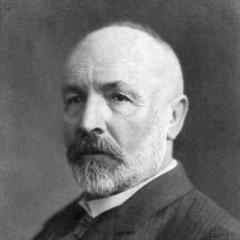
German mathematician and founder of set theory, a pioneer in the theory of infinity. His research on the foundations and logical structure of mathematics has had a profound impact on modern mathematics.
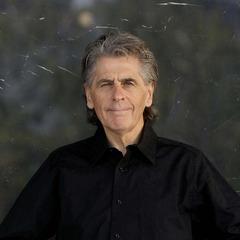
Keith Devlin is a renowned mathematician, writer, and public speaker. Born on March 16, 1947, in the United Kingdom, he later moved to the United States. Devlin has conducted extensive research in mathematics, particularly in number theory, graph theory, and combinatorics. His work encompasses a wide range of topics, including mathematics education, mathematical philosophy, and the application of mathematics in modern society.
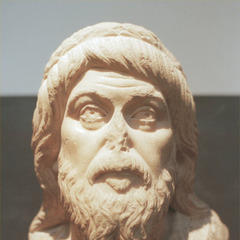
Proclus (February 8, 412 – April 17, 485) was a prominent late ancient Greek Neoplatonist philosopher, who served as the head of the Platonic Academy in Athens. He systematized and expanded the teachings of Plotinus and Iamblichus, earning the title 'the culmination of Neoplatonism.' His works cover metaphysics, cosmology, theology, mathematics, and literary criticism. His major writings, including 'Elements of Theology' and 'Platonic Theology,' profoundly influenced medieval Christian, Islamic, and Renaissance thought. Proclus emphasized the 'One' as the ultimate principle, from which all reality emanates through a hierarchy of intellect, soul, and matter. He advocated for a return to the divine through philosophy and mystical rites. His ideas resonated in the works of Pseudo-Dionysius, Thomas Aquinas, and Islamic philosophers, making him a key bridge between ancient and medieval philosophy.
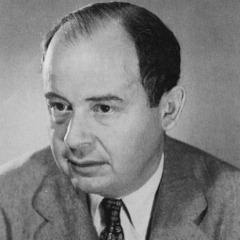
John von Neumann (December 28, 1903 – February 8, 1957) was a Hungarian-American mathematician, physicist, computer scientist, and polymath. He made groundbreaking contributions to mathematics, quantum mechanics, game theory, computer science, and economics. Von Neumann is one of the founders of modern computer architecture (the von Neumann architecture) and a key figure in the development of game theory and linear programming. He participated in the Manhattan Project, contributing to the atomic bomb, and proposed the theory of nuclear deterrence. Known for his extraordinary memory and rapid thinking, he was often called one of the 'Martians.' His work profoundly shaped 20th-century science and technology.
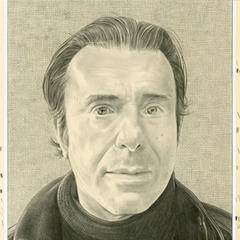
Robert Lawlor, born in 1939, is a renowned author whose works primarily focus on anthropology, mythology, and cosmology. He has profound insights into the exploration of human civilization and the universe.
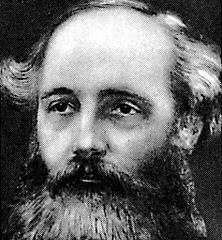
James Clerk Maxwell was an outstanding physicist known for his contributions to the field of electromagnetism. He formulated Maxwell's equations, which describe the properties of electromagnetic fields and predict the existence of electromagnetic waves. Maxwell's work has had a profound impact on modern physics and engineering.