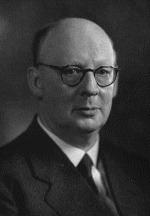
Wolfgang Ostwald
German chemist born on May 27, 1883, and died on November 22, 1943. Wolfgang Ostwald made significant contributions to the field of chemistry, particularly in colloidal chemistry and catalysis.
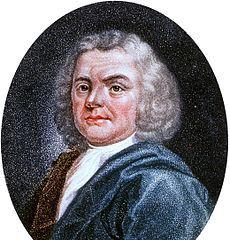
German chemist born on May 27, 1883, and died on November 22, 1943. Wolfgang Ostwald made significant contributions to the field of chemistry, particularly in colloidal chemistry and catalysis.
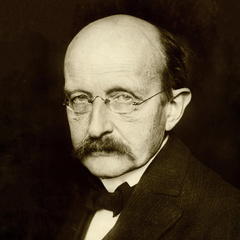
Max Planck, born on April 23, 1858 in Germany, died on October 4, 1947. He was a renowned German physicist and one of the founders of quantum theory, winning the Nobel Prize in Physics in 1918 for his discovery of Planck's constant.
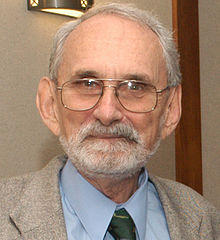
Robert Curl, a figure in an unknown profession/category, was born on August 23, 1933.
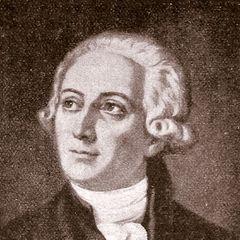
Antoine Lavoisier (August 26, 1743 – May 8, 1794) was a French chemist, widely regarded as the father of modern chemistry. He disproved the phlogiston theory through quantitative experiments, identified the role of oxygen in combustion, and named oxygen and hydrogen. Lavoisier also reformed chemical nomenclature, making chemical language systematic. His book 'Elements of Chemistry' laid the foundation of modern chemistry. However, during the French Revolution, he was executed by guillotine due to his former role as a tax collector.
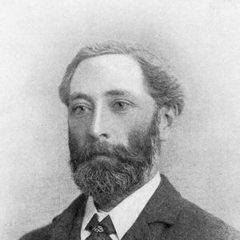
W. W. Rouse Ball was a distinguished British mathematician recognized for his work in geometry, number theory, and the history of mathematics. He held the position of professor at the University of Cambridge and authored numerous influential textbooks.
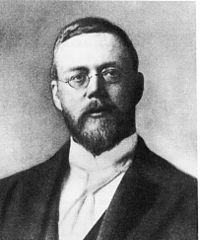
Reginald Fessenden was a prominent inventor who made significant contributions to the field of radio communication. He was born on October 6, 1866, and died on July 22, 1932. Fessenden achieved breakthroughs in wireless power transmission, radio telegraphy, and wireless music transmission.
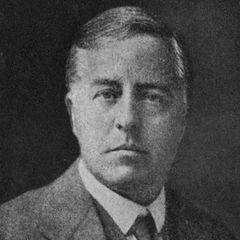
James Jeans was an influential British physicist known for his contributions to astrophysics and cosmology. His research encompassed stellar structure and the origins of the universe, having a profound impact on modern physics.
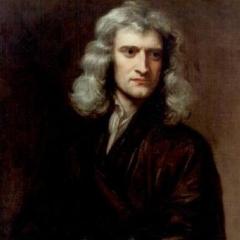
Isaac Newton was an English physicist, mathematician, and astronomer, considered one of the greatest scientists in history. He made significant contributions to physics, mathematics, and astronomy, particularly with his three laws of motion and the law of universal gravitation. Newton's work had a profound impact on the development of modern science and engineering.
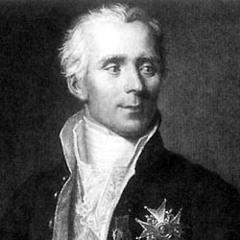
Pierre-Simon Laplace was a renowned French mathematician and astronomer born on March 23, 1749, and died on March 5, 1827. He is considered one of the founders of probability theory and celestial mechanics. Laplace's work in mathematics, astronomy, and probability has had a profound impact on the development of modern science.
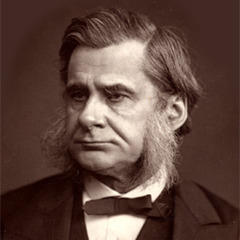
Thomas Huxley, a British biologist, was a staunch supporter of Darwin's theory of evolution. Renowned for his research in comparative anatomy, embryology, paleontology, and philosophy, Huxley made significant contributions to the field of biology. He had a profound influence on science, not only through his support of Darwin's theory of evolution but also through his role as a science popularizer and advocate for science education.