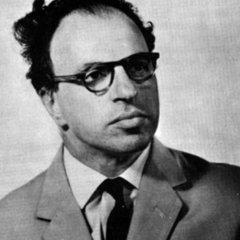
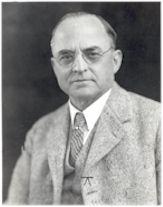
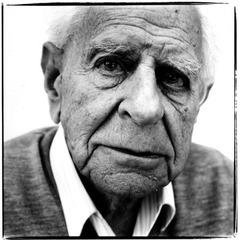
Hermann Bondi was a renowned astronomer and cosmologist, known for his research in the field of cosmology. Born on November 1, 1919, in Germany, he later became a British citizen. His work focused on stellar evolution, black hole theory, and cosmology. Bondi is recognized for his contributions to the understanding of stellar evolution, particularly his theory on the energy production of stars through nuclear fusion. He also made significant contributions to black hole theory, introducing the concept of Bondi accretion, which describes the process of matter approaching a black hole. In cosmology, Bondi, along with Thomas Gold, proposed the Bondi-Gold theory, predicting the existence of dark matter in the universe. His work has had a profound impact on the development of modern cosmology.
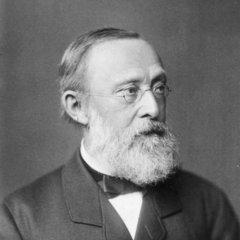
German physician and one of the founders of cellular pathology, known as one of the greatest scientists in the history of medicine. He proposed the basic principles of cellular pathology, which had a profound impact on the development of modern medicine.
Richard P. Feynman was a renowned theoretical physicist known for his contributions to quantum mechanics and quantum electrodynamics. He was also an exceptional physicist in the field of physics education, with popular science books like 'Surely You're Joking, Mr. Feynman!' that have won the hearts of readers.
German chemist born on May 27, 1883, and died on November 22, 1943. Wolfgang Ostwald made significant contributions to the field of chemistry, particularly in colloidal chemistry and catalysis.
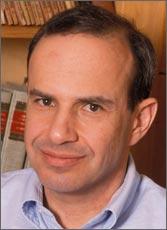
Nathan Seiberg is a renowned physicist known for his work in string theory and quantum field theory. Born on September 22, 1956, he has had a significant impact in the field of theoretical physics.
Lewis Howard Latimer was an African American inventor and engineer who made significant contributions to the development of the telegraph and the light bulb. He worked for the Edison Electric Light Company and is credited with improving the incandescent light bulb's filament. Latimer's work in the field of electrical engineering was pioneering and had a lasting impact on the industry.
Karl Pearson, born on March 27, 1857 and died on April 27, 1936, was a renowned British mathematician and statistician, often hailed as one of the founders of modern statistics. He made significant contributions to the fields of statistics, biometry, and genetics, particularly in the development of concepts and methods such as correlation coefficients, regression analysis, and hypothesis testing.
Charles Lyell, born on November 14, 1797 and died on February 22, 1875, was a renowned lawyer and geologist from the United Kingdom. He is best known for his extensive research in geology and his influential book 'Principles of Geology,' which had a profound impact on the development of the field.
German chemist born on June 25, 1864, and died on November 18, 1941. Walther Nernst made significant contributions to thermodynamics and electrochemistry, particularly in the study of chemical potential and the third law of thermodynamics. His work had a profound impact on the development of chemistry and physics.
Willis R. Whitney was an outstanding chemist known for his contributions to the field of organic chemistry. He was born on August 11, 1868, and passed away on January 9, 1958. Whitney played a significant role in the development of the chemical industry, particularly in the synthesis of dyes and drugs.
Karl Popper (July 28, 1902 – September 17, 1994) was an influential philosopher known for his work on critical rationalism and falsificationism. He is renowned for his contributions to the philosophy of science, political philosophy, and epistemology, with his ideas having a profound impact on these fields.