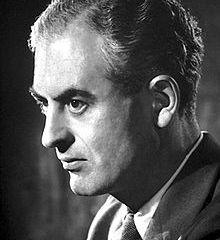
Peter Medawar
Peter Medawar was a British biologist and immunologist recognized for his work in transplantation immunology. He was awarded the Nobel Prize in Physiology or Medicine in 1960 for his discovery of immunological tolerance.
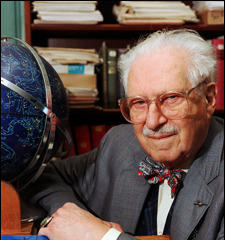
Peter Medawar was a British biologist and immunologist recognized for his work in transplantation immunology. He was awarded the Nobel Prize in Physiology or Medicine in 1960 for his discovery of immunological tolerance.
Cesar Milstein was a renowned immunologist known for his pioneering work in the field of monoclonal antibody technology. He, along with Georges Köhler and Niels Kaj Jerne, was awarded the Nobel Prize in Physiology or Medicine in 1975 for their contributions to antibody engineering.
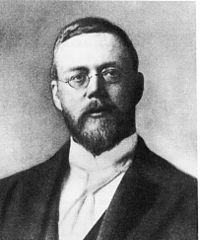
Reginald Fessenden was a prominent inventor who made significant contributions to the field of radio communication. He was born on October 6, 1866, and died on July 22, 1932. Fessenden achieved breakthroughs in wireless power transmission, radio telegraphy, and wireless music transmission.
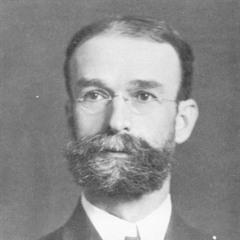
Theobald Smith, born on July 31, 1859, and died on December 10, 1934, was a renowned medical doctor. He made significant contributions to the field of medicine, particularly in the study and treatment of parasitic diseases.
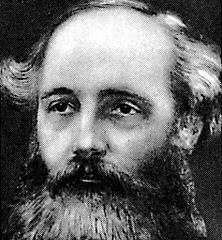
James Clerk Maxwell was an outstanding physicist known for his contributions to the field of electromagnetism. He formulated Maxwell's equations, which describe the properties of electromagnetic fields and predict the existence of electromagnetic waves. Maxwell's work has had a profound impact on modern physics and engineering.
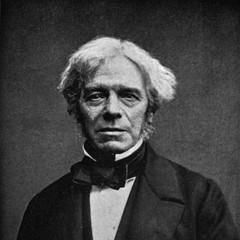
Michael Faraday was an English physicist and chemist, born on September 22, 1791, and died on August 25, 1867. He made significant contributions to the field of electromagnetism, particularly the discovery of electromagnetic induction, which had a profound impact on the development of the electric power industry and electrical engineering.
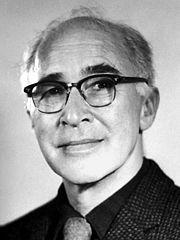
George Wald was an American biologist renowned for his research in the field of visual physiology. In the mid-20th century, his studies on retinal pigment vision significantly contributed to the understanding of human visual mechanisms. Wald was awarded the Nobel Prize in Physiology or Medicine in 1967 for his outstanding contributions to the field of visual physiology.
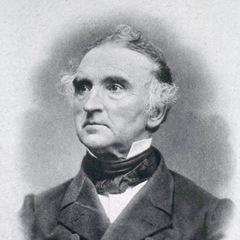
Justus von Liebig, a German chemist born on May 12, 1803, and died on April 18, 1873, is considered one of the founders of organic chemistry. He made significant contributions to the development of agricultural chemistry and food science.
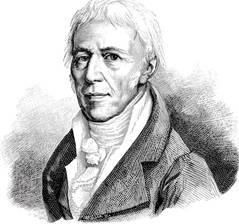
Jean-Baptiste Lamarck was a French naturalist and biologist, a key figure in the history of science. Born on August 1, 1744, in Bazentin, Oise, France, and died on December 18, 1829, in Paris, France. He is known for his contributions to the theory of evolution, particularly his theory of inheritance of acquired characteristics, which suggested that an organism could pass on traits acquired during its lifetime to its offspring. Although his theories are now considered outdated, they laid the groundwork for the modern understanding of evolution.
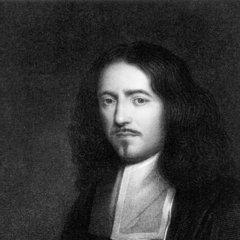
Marcello Malpighi was an Italian physician and scientist, renowned for his substantial contributions to anatomy and histology. Often hailed as the father of microscopic anatomy, he made numerous discoveries using the newly invented microscope. Malpighi's work laid the groundwork for modern histology, and his detailed studies of the body's structures and functions have had a lasting impact on medical science.