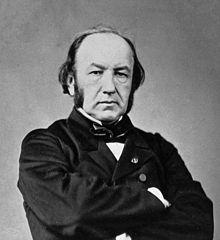
Claude Bernard
Claude Bernard was a French physiologist born on July 12, 1813, and died on February 10, 1878. He made significant contributions to the field of physiology, particularly in the study of the digestive system and the nervous system.
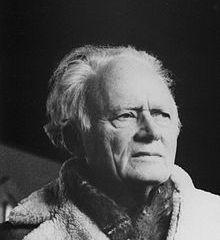
Claude Bernard was a French physiologist born on July 12, 1813, and died on February 10, 1878. He made significant contributions to the field of physiology, particularly in the study of the digestive system and the nervous system.
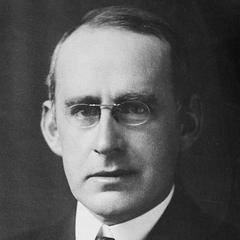
Arthur Eddington was a distinguished British astronomer recognized for his contributions to astrophysics and cosmology. He is particularly renowned for his observations during the 1919 solar eclipse, which validated Einstein's theory of general relativity. Eddington's legacy in astronomy has significantly advanced our comprehension of the cosmos.
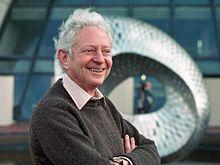
Leon M. Lederman is a renowned experimental physicist known for his research in particle physics. In 1956, he and Melvin Schwartz discovered the muon, for which they were jointly awarded the Nobel Prize in Physics in 1988. Lederman completed his undergraduate and graduate studies at the University of Chicago, where he began his scientific career.
Anthony Standen was an accomplished British author known for his profound insights into history and culture. His works covered a wide range of historical themes from the Middle Ages to the modern era, celebrated for their unique narrative style and attention to detail.
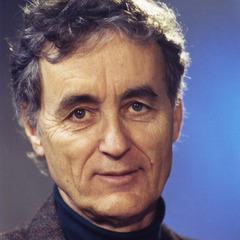
Fritjof Capra (born February 1, 1939) is an Austrian-born American physicist, systems theorist, and ecological thinker. He is best known for his 1975 book 'The Tao of Physics', which explores parallels between modern physics and Eastern mysticism. Capra advocates for deep ecology and systems thinking, integrating science, society, and ecology. His works, including 'The Turning Point' and 'The Web of Life', have influenced global environmental movements and interdisciplinary studies. He co-founded the Center for Ecoliteracy in Berkeley, California, promoting sustainable education. Capra's ideas have sparked both acclaim and criticism, but he remains a key figure in paradigm shift discourse.
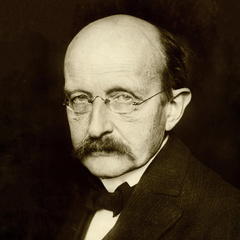
Max Planck, born on April 23, 1858 in Germany, died on October 4, 1947. He was a renowned German physicist and one of the founders of quantum theory, winning the Nobel Prize in Physics in 1918 for his discovery of Planck's constant.
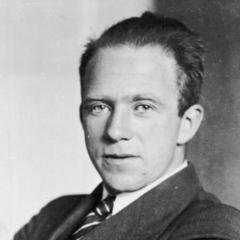
German theoretical physicist and one of the founders of quantum mechanics, known for his formulation of the uncertainty principle. He made significant contributions to the field of physics, particularly in quantum mechanics and nuclear physics.
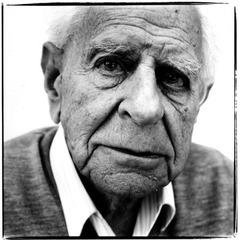
Karl Popper (July 28, 1902 – September 17, 1994) was an influential philosopher known for his work on critical rationalism and falsificationism. He is renowned for his contributions to the philosophy of science, political philosophy, and epistemology, with his ideas having a profound impact on these fields.
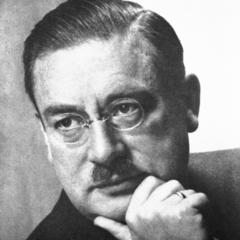
Peter Debye was a Dutch-American chemist recognized for his contributions to physical chemistry. He was awarded the Nobel Prize in Chemistry in 1936 for his research on the effects of temperature on the compressibility, thermal conductivity, and specific heat of gases, and for his formulation of Debye equations.
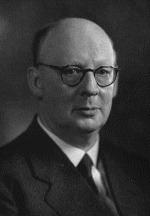
German chemist born on May 27, 1883, and died on November 22, 1943. Wolfgang Ostwald made significant contributions to the field of chemistry, particularly in colloidal chemistry and catalysis.