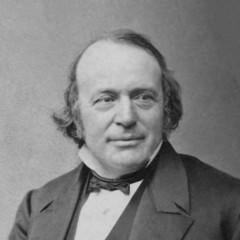
Louis Agassiz
Louis Agassiz, born on May 28, 1807 in Switzerland and died on December 14, 1873 in the United States, was a renowned geologist in the 19th century. He made significant contributions to the fields of paleontology and geology.
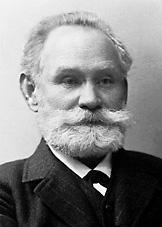
Louis Agassiz, born on May 28, 1807 in Switzerland and died on December 14, 1873 in the United States, was a renowned geologist in the 19th century. He made significant contributions to the fields of paleontology and geology.
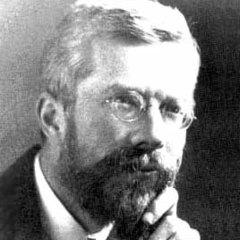
Ronald Fisher (February 17, 1890 – July 29, 1962) was a British statistician, geneticist, and evolutionary biologist, regarded as one of the founders of modern statistics. He developed key statistical methods such as analysis of variance, maximum likelihood estimation, and Fisher's exact test, and applied statistical theory to genetics and evolutionary biology, contributing to the modern evolutionary synthesis. Fisher studied mathematics and physics at Cambridge University, later worked at Rothamsted Experimental Station and University College London, and spent his final years in Australia. His work profoundly influenced experimental design, biostatistics, and population genetics, though his support for eugenics remains controversial.
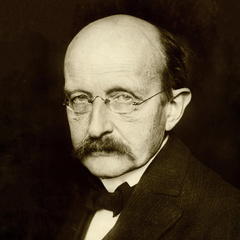
Max Planck, born on April 23, 1858 in Germany, died on October 4, 1947. He was a renowned German physicist and one of the founders of quantum theory, winning the Nobel Prize in Physics in 1918 for his discovery of Planck's constant.
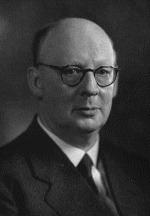
German chemist born on May 27, 1883, and died on November 22, 1943. Wolfgang Ostwald made significant contributions to the field of chemistry, particularly in colloidal chemistry and catalysis.
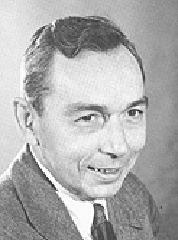
Marston Bates was a renowned American author known for his profound insights into the relationship between humans and nature. His works often explore the interaction between humans and the natural environment, as well as the impact of this interaction on individuals and society. Bates' writing style is unique, blending literary and philosophical elements, which has had a profound impact on the literary world.
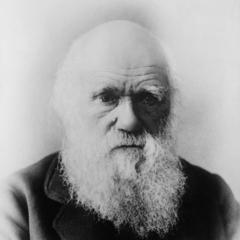
Charles Darwin, a British naturalist, is renowned as the founder of evolutionary biology. Born on February 12, 1809, in England, he passed away on April 19, 1882. Darwin is best known for his research on the theory of evolution, which proposed that species evolve through natural selection and survival of the fittest.
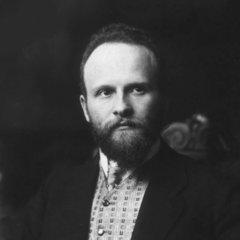
Robert Barany was a scholar in the field of [Unknown]. He was born on April 22, 1876, and passed away on April 8, 1936.
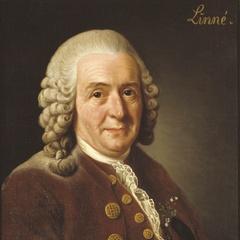
Carl Linnaeus (May 23, 1707 - January 10, 1778) was a Swedish botanist, zoologist, physician, and systematist. He is considered the father of modern biological classification and his binomial nomenclature has had a profound impact on the development of biology.
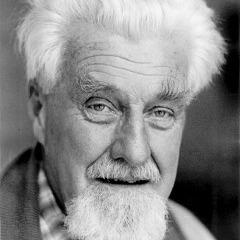
Konrad Lorenz was a renowned zoologist known for his contributions to the field of animal behavior. Born on November 7, 1903, and passing away on February 27, 1989, Lorenz's research focused on the social and instinctual behaviors of animals, as well as the influence of the environment on animal behavior. His work has had a profound impact on subsequent research in animal behavior.
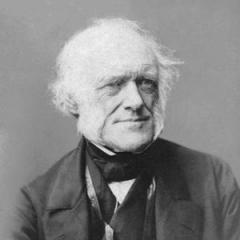
Charles Lyell, born on November 14, 1797 and died on February 22, 1875, was a renowned lawyer and geologist from the United Kingdom. He is best known for his extensive research in geology and his influential book 'Principles of Geology,' which had a profound impact on the development of the field.