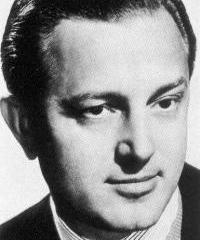
Edward Dmytryk
Edward Dmytryk was a renowned film director known for his exceptional contributions to war films and noir cinema. His unique style and profound insights into human nature and the horrors of war have left a lasting impact on audiences.
Edward Dmytryk was a renowned film director known for his exceptional contributions to war films and noir cinema. His unique style and profound insights into human nature and the horrors of war have left a lasting impact on audiences.
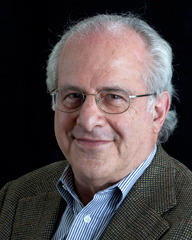
Richard D. Wolff is an American economist renowned for his application of Marxist economics and analysis of capitalist economic crises. His contributions to the field of economics include labor theory of value, the theory of surplus value, and theories of economic crises. Born on April 1, 1942, Wolff has served as a professor of economics at various universities.
Cynthia Kauffman, born on August 23, 1948, is a renowned figure in an unknown field.
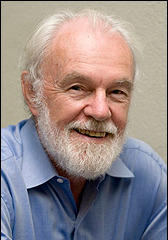
David Harvey, born on October 31, 1935, is a renowned British geographer, Marxist theorist, and social theorist. He has conducted extensive research in the field of geography, particularly on issues of capital accumulation, urban geography, and postmodern geography. Professor Harvey's work has had a profound impact on academic research and political movements worldwide.
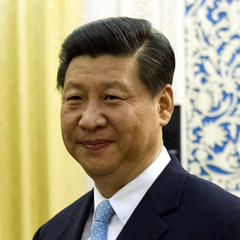
Xi Jinping, born June 15, 1953 in Fuping, Shaanxi Province, is the current General Secretary of the Communist Party of China (CPC), Chairman of the CPC Central Military Commission, and President of the People's Republic of China. He previously served as Party Secretary of Zhejiang Province and Shanghai Municipality. During his tenure as the nation's top leader, he has proposed the concept of the Chinese Dream of national rejuvenation, promoted comprehensive deepening of reforms, emphasized the rule of law, and advanced the building of a community with a shared future for mankind.
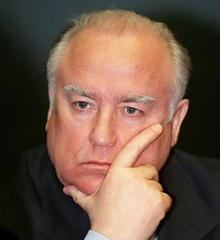
Viktor Chernomyrdin was a prominent Russian politician who served as the Prime Minister of the Russian Federation. He began his political career in the mid-1980s and became Prime Minister in the early 1990s. Chernomyrdin is known for his pragmatic foreign policy and his role in Russia's economic transformation.
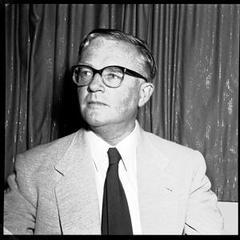
Bram Fischer was a distinguished South African lawyer recognized for his defense of anti-apartheid activists. Born on April 23, 1908, and passing away on May 8, 1975, Fischer's legal career was characterized by his unwavering commitment to justice and human rights, particularly in the face of South Africa's apartheid regime.
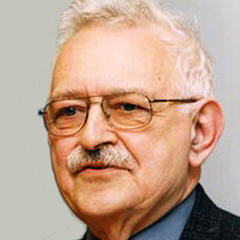
Immanuel Wallerstein is a renowned American sociologist known for his contributions to world-systems theory. His research focuses on globalization and international relations, profoundly influencing the understanding of the modern world order.

Klaus Fuchs was a German physicist who became a Soviet spy during his time working at Los Alamos National Laboratory. He was born on December 29, 1911, and died on January 28, 1988. Fuchs played a significant role in the development of the atomic bomb during World War II and provided critical information to the Soviet Union about the Manhattan Project, contributing to the arms race and the Cold War.
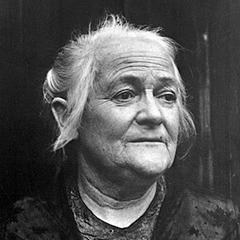
Clara Zetkin was a German socialist and feminist activist. Born on July 5, 1857, she passed away on June 20, 1933. Zetkin played a significant role in German social and political life in the late 19th and early 20th centuries, dedicating herself to the advancement of women's rights and socialist causes.