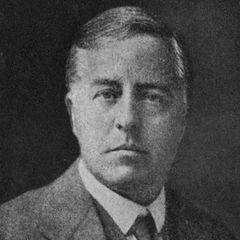
James Jeans
James Jeans was an influential British physicist known for his contributions to astrophysics and cosmology. His research encompassed stellar structure and the origins of the universe, having a profound impact on modern physics.
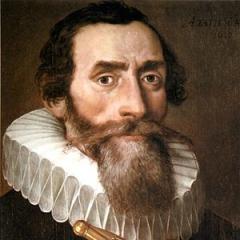
James Jeans was an influential British physicist known for his contributions to astrophysics and cosmology. His research encompassed stellar structure and the origins of the universe, having a profound impact on modern physics.
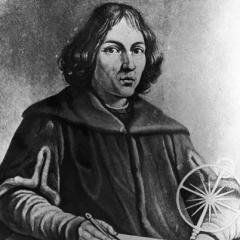
Nicolaus Copernicus (February 19, 1473 - May 24, 1543) was a Renaissance astronomer, mathematician, and Catholic priest. He is known for his work on the heliocentric model of the solar system, which laid the foundation for modern astronomy and had a profound impact on the Scientific Revolution.
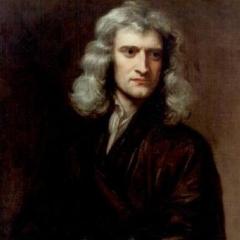
Isaac Newton was an English physicist, mathematician, and astronomer, considered one of the greatest scientists in history. He made significant contributions to physics, mathematics, and astronomy, particularly with his three laws of motion and the law of universal gravitation. Newton's work had a profound impact on the development of modern science and engineering.
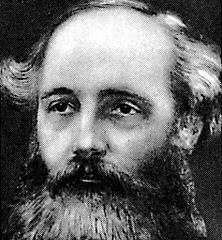
James Clerk Maxwell was an outstanding physicist known for his contributions to the field of electromagnetism. He formulated Maxwell's equations, which describe the properties of electromagnetic fields and predict the existence of electromagnetic waves. Maxwell's work has had a profound impact on modern physics and engineering.
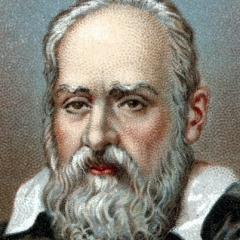
Galileo Galilei, an Italian physicist, astronomer, mathematician, and philosopher, is considered the father of modern science. He was born on February 15, 1564, and died on January 8, 1642. Galileo made significant contributions to the fields of physics, astronomy, mathematics, and philosophy. He discovered the four moons of Jupiter through his telescope, supporting Copernicus' heliocentric model, and proposed the law of free fall and other scientific theories.
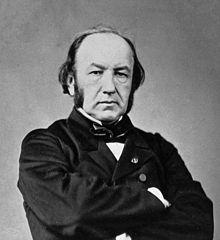
Claude Bernard was a French physiologist born on July 12, 1813, and died on February 10, 1878. He made significant contributions to the field of physiology, particularly in the study of the digestive system and the nervous system.
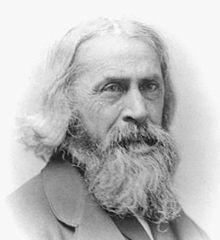
Benjamin Peirce was an American mathematician born on April 4, 1809, and died on October 6, 1880. He made significant contributions to the fields of mathematical analysis, algebra, and mathematical physics.
George Iles (1852-1942) was a renowned author from the United Kingdom. His works spanned a variety of fields, including history, literature, and philosophy. Iles was known for his in-depth research and attention to detail, and his works have had a profound impact on posterity.
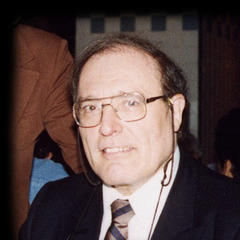
Gian-Carlo Rota was an Italian-American mathematician renowned for his contributions to combinatorics, algebraic geometry, and mathematical analysis. He served as a professor at MIT and Harvard University, and his research had a substantial impact on the advancement of these mathematical disciplines.

Noga Alon is an Israeli mathematician known for his contributions to combinatorics and graph theory. Born on February 17, 1956, he is a distinguished scholar in the fields of theoretical computer science and algorithm design.