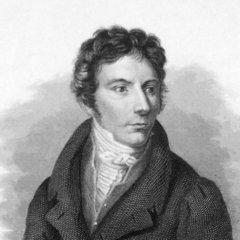
Lorenz Oken
Lorenz Oken, born on August 1, 1779 and died on August 11, 1851, was a prominent German naturalist. He made significant contributions to the fields of biology, philosophy, and art.
Lorenz Oken, born on August 1, 1779 and died on August 11, 1851, was a prominent German naturalist. He made significant contributions to the fields of biology, philosophy, and art.
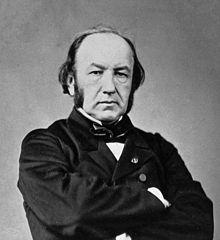
Claude Bernard was a French physiologist born on July 12, 1813, and died on February 10, 1878. He made significant contributions to the field of physiology, particularly in the study of the digestive system and the nervous system.
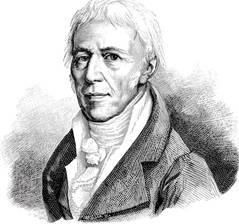
Jean-Baptiste Lamarck was a French naturalist and biologist, a key figure in the history of science. Born on August 1, 1744, in Bazentin, Oise, France, and died on December 18, 1829, in Paris, France. He is known for his contributions to the theory of evolution, particularly his theory of inheritance of acquired characteristics, which suggested that an organism could pass on traits acquired during its lifetime to its offspring. Although his theories are now considered outdated, they laid the groundwork for the modern understanding of evolution.
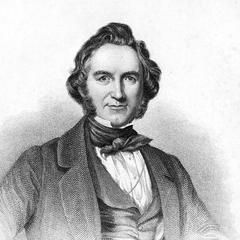
Joseph Paxton was a renowned British architect, best known for designing the famous Crystal Palace in London. Born on August 3, 1803, he passed away on June 8, 1865. Paxton had a significant impact on the field of architecture, particularly in the design of greenhouses and exhibition halls.
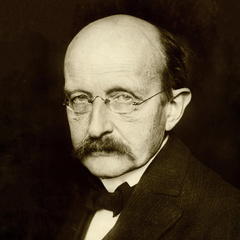
Max Planck, born on April 23, 1858 in Germany, died on October 4, 1947. He was a renowned German physicist and one of the founders of quantum theory, winning the Nobel Prize in Physics in 1918 for his discovery of Planck's constant.
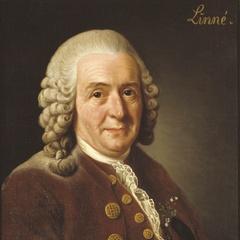
Carl Linnaeus (May 23, 1707 - January 10, 1778) was a Swedish botanist, zoologist, physician, and systematist. He is considered the father of modern biological classification and his binomial nomenclature has had a profound impact on the development of biology.
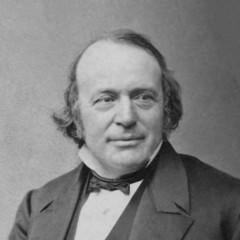
Louis Agassiz, born on May 28, 1807 in Switzerland and died on December 14, 1873 in the United States, was a renowned geologist in the 19th century. He made significant contributions to the fields of paleontology and geology.
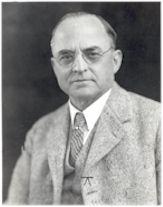
Willis R. Whitney was an outstanding chemist known for his contributions to the field of organic chemistry. He was born on August 11, 1868, and passed away on January 9, 1958. Whitney played a significant role in the development of the chemical industry, particularly in the synthesis of dyes and drugs.

According to limited available information, biographical details for Riffat Hassan (born 1943) remain incomplete. Further details about this individual's identity, profession, and background are not available in current resources.
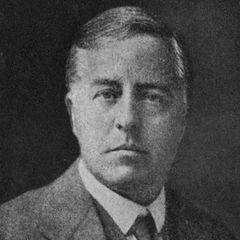
James Jeans was an influential British physicist known for his contributions to astrophysics and cosmology. His research encompassed stellar structure and the origins of the universe, having a profound impact on modern physics.