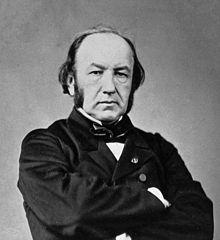
Claude Bernard
Claude Bernard was a French physiologist born on July 12, 1813, and died on February 10, 1878. He made significant contributions to the field of physiology, particularly in the study of the digestive system and the nervous system.
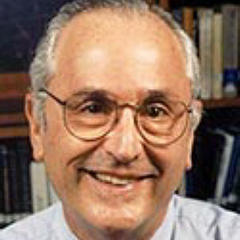
Claude Bernard was a French physiologist born on July 12, 1813, and died on February 10, 1878. He made significant contributions to the field of physiology, particularly in the study of the digestive system and the nervous system.
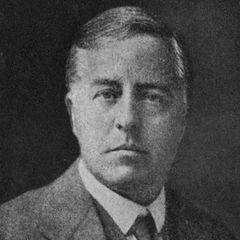
James Jeans was an influential British physicist known for his contributions to astrophysics and cosmology. His research encompassed stellar structure and the origins of the universe, having a profound impact on modern physics.
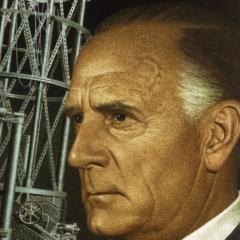
Edwin Powell Hubble was an American astronomer known for his significant contributions to observational cosmology and extragalactic astronomy. His discovery in 1929 that the universe is expanding was a major breakthrough, leading to the acceptance of the Big Bang theory. Hubble's work also provided evidence for the existence of galaxies beyond the Milky Way and helped establish Hubble's Law.
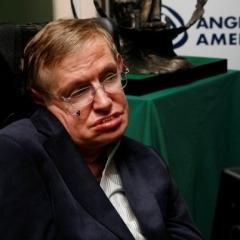
Stephen Hawking was a renowned British theoretical physicist known for his contributions to the fields of black hole theory and cosmology. Born on January 8, 1942, he overcame the challenges of ALS to become a global icon of science and perseverance.
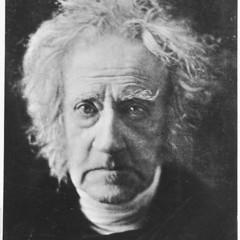
Sir John Herschel was a British astronomer, mathematician, and chemist, renowned for his contributions to astronomy and photography. He was born on March 7, 1792, and died on May 11, 1871.
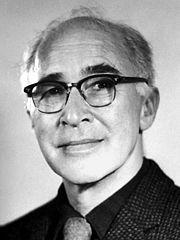
George Wald was an American biologist renowned for his research in the field of visual physiology. In the mid-20th century, his studies on retinal pigment vision significantly contributed to the understanding of human visual mechanisms. Wald was awarded the Nobel Prize in Physiology or Medicine in 1967 for his outstanding contributions to the field of visual physiology.
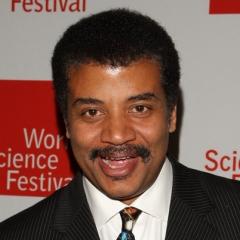
Neil deGrasse Tyson is an American astrophysicist, science communicator, and television personality. Born on October 5, 1958, he is renowned for his deep understanding of the cosmos and his ability to popularize scientific knowledge. Tyson grew up in New York City and earned a Ph.D. in astronomy from Columbia University. He served as the director of the Hayden Planetarium at the American Museum of Natural History and has been a member of various scientific committees.
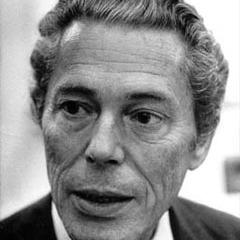
A renowned biologist and French Nobel laureate, Jacques Monod is known for his research in genetics and molecular biology. He made significant contributions to the discovery of gene regulation and the genetic code.
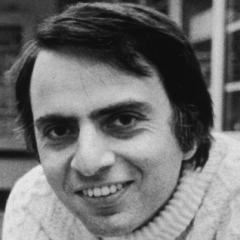
Carl Sagan was an American astronomer, cosmologist, author, and science communicator, born on November 9, 1934, in Brooklyn, New York. He is renowned for his profound research into the cosmos and his dedication to popularizing science. Sagan proposed numerous theories about the origin of the universe and life, and he made complex scientific knowledge accessible to the public with his unique perspective and clear, engaging writing style.
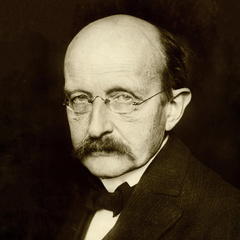
Max Planck, born on April 23, 1858 in Germany, died on October 4, 1947. He was a renowned German physicist and one of the founders of quantum theory, winning the Nobel Prize in Physics in 1918 for his discovery of Planck's constant.