
Esko Valtaoja
Esko Valtaoja is a Finnish writer known for his unique literary style and profound thematic explorations. His works span a variety of genres, from historical novels to science fiction, and have won the hearts of readers worldwide.
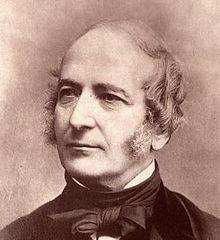
Esko Valtaoja is a Finnish writer known for his unique literary style and profound thematic explorations. His works span a variety of genres, from historical novels to science fiction, and have won the hearts of readers worldwide.
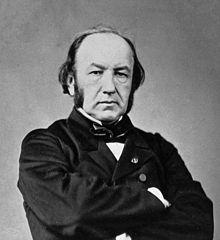
Claude Bernard was a French physiologist born on July 12, 1813, and died on February 10, 1878. He made significant contributions to the field of physiology, particularly in the study of the digestive system and the nervous system.
George Iles (1852-1942) was a renowned author from the United Kingdom. His works spanned a variety of fields, including history, literature, and philosophy. Iles was known for his in-depth research and attention to detail, and his works have had a profound impact on posterity.
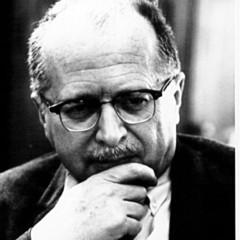
Jesse L. Greenstein was an accomplished astronomer known for his research on stellar evolution and the structure of the Milky Way galaxy. He held a significant position in the field of astronomy during the 20th century and had a profound impact on his successors.
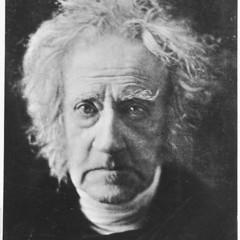
Sir John Herschel was a British astronomer, mathematician, and chemist, renowned for his contributions to astronomy and photography. He was born on March 7, 1792, and died on May 11, 1871.
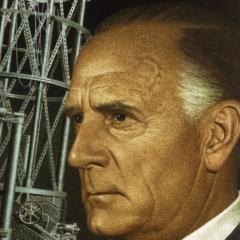
Edwin Powell Hubble was an American astronomer known for his significant contributions to observational cosmology and extragalactic astronomy. His discovery in 1929 that the universe is expanding was a major breakthrough, leading to the acceptance of the Big Bang theory. Hubble's work also provided evidence for the existence of galaxies beyond the Milky Way and helped establish Hubble's Law.
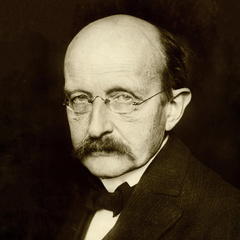
Max Planck, born on April 23, 1858 in Germany, died on October 4, 1947. He was a renowned German physicist and one of the founders of quantum theory, winning the Nobel Prize in Physics in 1918 for his discovery of Planck's constant.
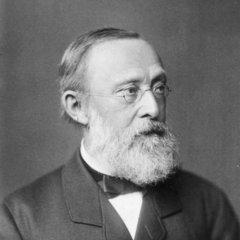
German physician and one of the founders of cellular pathology, known as one of the greatest scientists in the history of medicine. He proposed the basic principles of cellular pathology, which had a profound impact on the development of modern medicine.
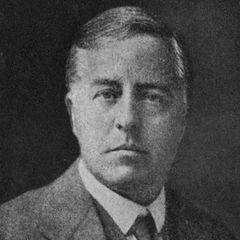
James Jeans was an influential British physicist known for his contributions to astrophysics and cosmology. His research encompassed stellar structure and the origins of the universe, having a profound impact on modern physics.
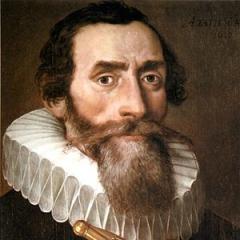
Johannes Kepler was a German astronomer, mathematician, and physicist, renowned for his research on the laws of planetary motion. He formulated the famous Kepler's laws, which describe the regularities of planetary orbits around the sun. Kepler's work had a profound impact on the development of astronomy and physics.