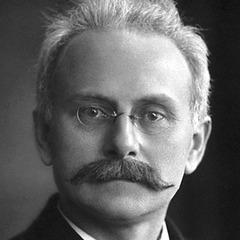
Johannes Stark
German physicist known for his discovery of the Stark effect and the invention of the proton microscope. He made significant contributions to quantum theory and the study of atomic structure.
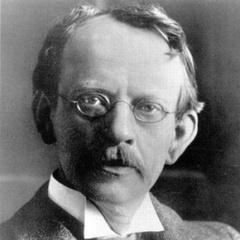
German physicist known for his discovery of the Stark effect and the invention of the proton microscope. He made significant contributions to quantum theory and the study of atomic structure.
German physicist known as the discoverer of X-rays. He made significant contributions to the field of physics, particularly in electromagnetism and optics. Rontgen's research had a profound impact on medical imaging technology.
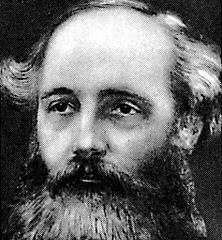
James Clerk Maxwell was an outstanding physicist known for his contributions to the field of electromagnetism. He formulated Maxwell's equations, which describe the properties of electromagnetic fields and predict the existence of electromagnetic waves. Maxwell's work has had a profound impact on modern physics and engineering.
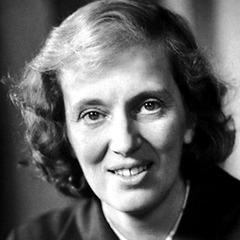
Dorothy Hodgkin was a British biochemist renowned for her contributions to X-ray crystallography. She won the Nobel Prize in Chemistry in 1964 for her work in elucidating the structures of complex biological molecules, becoming the first woman to receive the award.
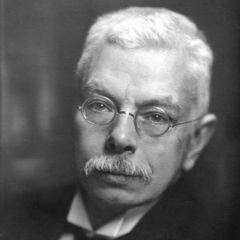
Pieter Zeeman was a Dutch physicist known for his work in the field of electromagnetism. He discovered the Zeeman effect in 1889, which revealed the influence of magnetic fields on spectral lines. For this discovery, he was awarded the Nobel Prize in Physics in 1902. Zeeman's research had a profound impact on the development of quantum mechanics.
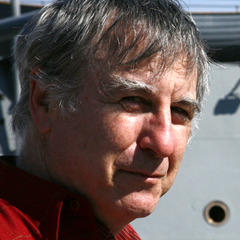
Joel Spencer is a renowned mathematician born on April 20, 1946. He is known for his extensive research and contributions in the fields of combinatorial mathematics and probability theory.
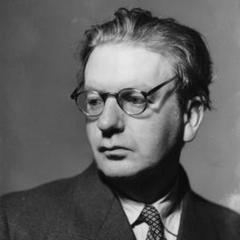
John Logie Baird was a Scottish inventor and engineer, renowned for his contributions to television technology. He is considered one of the pioneers of television and successfully demonstrated the first television image transmission in 1925.
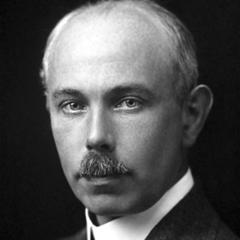
Francis William Aston was a British chemist renowned for his contributions to mass spectrometry. He won the 1922 Nobel Prize in Chemistry for inventing the mass spectrometer and using it to study isotopes. Aston's research had a profound impact on the development of chemistry and physics.
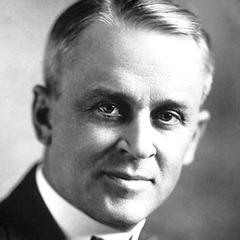
Robert Andrews Millikan was a renowned physicist known for his contributions to the precise measurement of the electron charge. In 1909, he was awarded the Nobel Prize in Physics for his work. Millikan's oil drop experiment was a landmark in this achievement, laying the foundation for the development of quantum mechanics.
August Kekule was a German chemist renowned for his contributions to organic chemistry. His most famous achievement was the proposal of the benzene ring structure, which had a profound impact on the development of chemical structural theory.