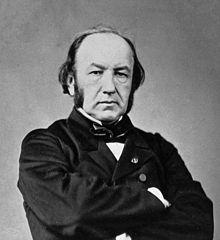
Claude Bernard
Claude Bernard was a French physiologist born on July 12, 1813, and died on February 10, 1878. He made significant contributions to the field of physiology, particularly in the study of the digestive system and the nervous system.
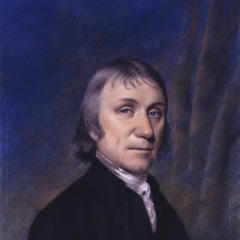
Claude Bernard was a French physiologist born on July 12, 1813, and died on February 10, 1878. He made significant contributions to the field of physiology, particularly in the study of the digestive system and the nervous system.
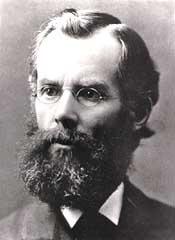
J. N. Andrews, born on July 22, 1829, and died on October 21, 1883, was a prominent missionary. During his mission in China, he dedicated himself to spreading Christian faith and actively engaged in educational and translation work, which had a profound impact on the development of Christianity in China.
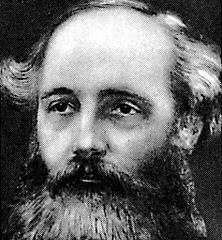
James Clerk Maxwell was an outstanding physicist known for his contributions to the field of electromagnetism. He formulated Maxwell's equations, which describe the properties of electromagnetic fields and predict the existence of electromagnetic waves. Maxwell's work has had a profound impact on modern physics and engineering.
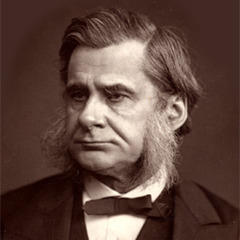
Thomas Huxley, a British biologist, was a staunch supporter of Darwin's theory of evolution. Renowned for his research in comparative anatomy, embryology, paleontology, and philosophy, Huxley made significant contributions to the field of biology. He had a profound influence on science, not only through his support of Darwin's theory of evolution but also through his role as a science popularizer and advocate for science education.
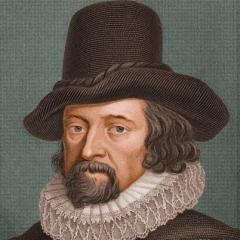
Francis Bacon, a renowned philosopher, politician, and writer, served as the Lord Chancellor of England. He is best known for his profound philosophical thoughts and extensive literary works, which have had a lasting impact on the world.
Limited information is available about Robert Ferrar, who is believed to have lived and died on March 30, 1555. His profession and life story are not well-documented.
John Plamenatz was an individual who made significant contributions in the field of [Unknown]. Born on May 16, 1912, he passed away in 1975.
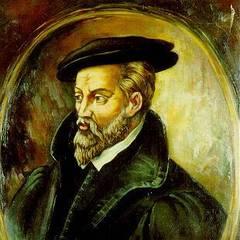
Georgius Agricola, also known as Georgius Agricola, was a renowned mineralogist, geologist, and chemist in history. His lifespan was from March 24, 1494 to November 21, 1555. Agricola is known for his contributions to mineralogy and geology and is considered one of the pioneers in these fields.
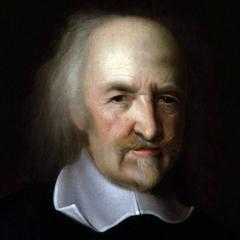
Thomas Hobbes, a British philosopher, politician, historian, economist, and writer, was born on April 5, 1588, in Wiltshire, and died on December 4, 1679, in Oxford, England. Hobbes is considered one of the most important philosophers of the 17th century, known for his profound analysis of the state, society, and human behavior.
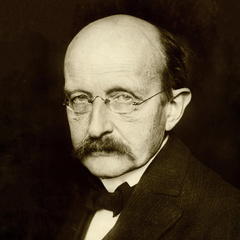
Max Planck, born on April 23, 1858 in Germany, died on October 4, 1947. He was a renowned German physicist and one of the founders of quantum theory, winning the Nobel Prize in Physics in 1918 for his discovery of Planck's constant.