Quotessence
Home / Authors / Kabir Helminski
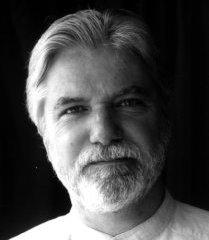
Kabir Helminski

Kabir Helminski Quotes

Author

Filter quotes by topic

Famous Kabir Helminski Quotes

“On the spiritual path we choose to give a certain amount of time and effort to be in the company of the Divine consciously and intentionally. It‘s appropriate to have, as we have in our Tradition, times of the day dedicated to this. There are times when we make an effort to bring ourselves into the presence of God. In our Tradition there is a physical effort involved in worship – the postures of bowing and prostration during salaat, or the practice of turning. It‘s „doing,“ not just a „being“ in Sufi spiritual practice. It‘s „doing“ with „being.“ The physical efforts in the ritual prayer also are done in time. We undertake the ritual prayers at the times indicated, following what we believe to be a heavenly, ordained pattern, not merely at our convenience, not just when we want to. (p. 3)”

“In our Tradition, we use the body to experience the presence of God. We can teach the body what it feels like to surrender to the Divine as our forehead touches the ground during prayer. This is something the body needs to tangibly experience. (p. 6)”

“Worship is taking time from the momentum of our lives to stop and stand before the Face of God for a few minutes. The prostrations in the ritual prayer that are the regular practice of the Islamic tradition, and which Sufis also do, include four to eight cycles of standing, bowing, and prostrating. At most, the ritual prayer takes between five and ten minutes. It‘s a deep and mindful encounter with the Infinite Face of God, not performing a ritual with rote recitations. In fact, the Prophet Muhammad, peace be upon him, said, „If your ritual prayer is not done with presence, it‘s not worship.“ Presence is absolutely essential to the ritual prayer. The whole normative practice of Islam, its basic practices and rituals, are a spiritual training system when properly understood […] One of our friends, a great Sufi teacher, recently said, „Everything is in the prostration.“ When our foreheads touch the ground we enter into that Divine Oblivion. It is oblivion, in the sense that we are so present with the Divine that everything else just disappears. We‘re completely there in the consciousness of the Divine, forehead to the ground, for that moment. It‘s a kind of bliss. (p. 103)”