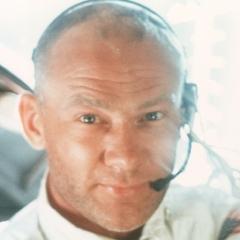
Buzz Aldrin
Buzz Aldrin, an American astronaut born on January 20, 1930, is renowned for his contributions to space exploration. He was the second human to walk on the Moon, alongside Neil Armstrong, during the Apollo 11 mission.
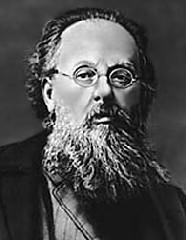
Buzz Aldrin, an American astronaut born on January 20, 1930, is renowned for his contributions to space exploration. He was the second human to walk on the Moon, alongside Neil Armstrong, during the Apollo 11 mission.
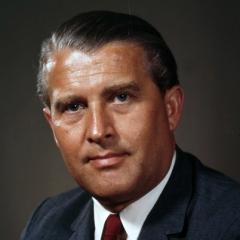
German rocket scientist known as the 'Father of Rocketry'. Wernher von Braun worked for Nazi Germany during World War II and continued his rocket research in the United States after the war, making significant contributions to human space exploration.
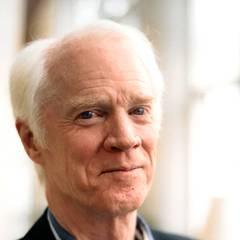
Rusty Schweickart is an American astronaut, a member of NASA's astronaut corps. He has participated in many important space missions, including the Apollo program and the Space Shuttle program, making significant contributions to human space exploration.
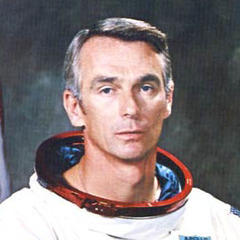
Gene Cernan (March 14, 1934 - January 16, 2017) was an American naval aviator, astronaut, and the commander of Apollo 17, the last human to walk on the Moon. He flew three space missions: Gemini 9A, Apollo 10, and Apollo 17. Known for his exceptional piloting skills and contributions to space exploration, Cernan left his footprints on the lunar surface, symbolizing humanity's final steps on the Moon during the Apollo era.
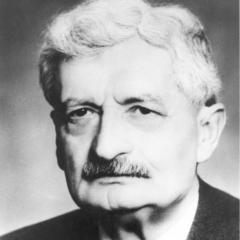
Hermann Oberth, known as the 'Father of Rocketry,' was a German physicist born on June 25, 1894, in Romania, and died on December 28, 1989, in Germany. He made significant contributions to physics and space exploration, proposing the theory of multistage rockets and profoundly influencing the field.
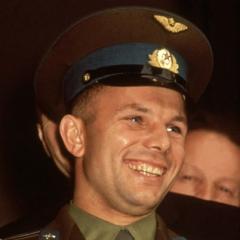
Yuri Gagarin, a Soviet cosmonaut, was the first human to travel into space. Born on March 9, 1934, in the village of Klushino, Gzhatsk District, Smolensk Oblast, he tragically died in a plane crash on March 27, 1968. Gagarin's historic spaceflight aboard Vostok 1 on April 12, 1961, marked the beginning of the space age.
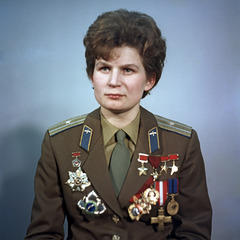
Valentina Tereshkova, born on March 6, 1937, is a renowned Soviet cosmonaut and the first woman to travel to space. Her historic flight in 1963, where she was the sole occupant of the spacecraft, made her a global icon and opened doors for female astronauts worldwide.
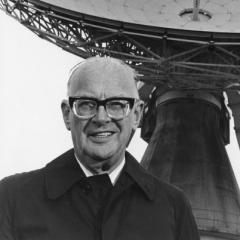
Arthur C. Clarke was a British science fiction author, writer, and science popularizer. Known for his science fiction novels and predictions about future technology, his most famous works include '2001: A Space Odyssey' and 'Rendezvous with Rama'. Clarke's science fiction novels are not only literarily valuable but also had a profound impact on science fiction films and television.
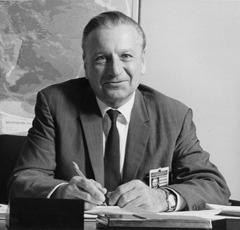
Krafft Arnold Ehricke was a German-born American engineer renowned for his contributions to the field of space exploration. His work in rocket propulsion significantly influenced the modern space industry.
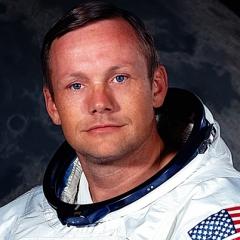
Neil Armstrong, born on August 5, 1930, in Ohio, United States, was an American astronaut and the first human to walk on the Moon. On July 20, 1969, as the commander of Apollo 11, Armstrong made history by becoming the first person to set foot on the lunar surface. His famous quote, 'That's one small step for man, one giant leap for mankind,' has become an iconic statement in human space exploration.