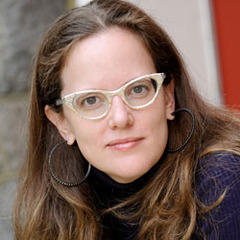
“Food is part of God's creating. A right relationship with food points us toward Him.... The table is not only a place where we can become present to God. The table is also a place where He becomes present to us.” ChristianityFoodHolinessDietSpiritual Disciplines Author:Lauren F. Winner
“God cares about our dietary choices. This should come as no surprise; you only have to read the first two chapters of Genesis to see God's concern for food. Humanity's first sin was disobedience manifested in a choice about eating. Adam and Eve were allowed to eat anything they wanted, except the one fruit they chose. And the New Testament makes clear that God cares about the most basic quotidian aspect of our lives. (Our God, after all, is the God who provides for the sparrows and numbers the hairs on our heads.) This God who is interested in how we speak, how we handle our money, how we carry our bodies - He is also interested in how we live with food.” ChristianityHolinessDietSpiritual Disciplines Book:Mudhouse Sabbath Source: Mudhouse Sabbath
“Jews are obligated to fulfill the particularities of Mosaic law. They don't light Sabbath candles simply because candles make them feel close to God, but because God commanded the lighting of candles: Closeness might be a nice by-product, but it is not the point. Christians will understand candle-lighting a little differently. Spiritual practices don't justify us. They don't save us. Rather, they refine our Christianity; they make the inheritance Christ gives us on the Cross more fully our own... Practicing the spiritual disciplines does not make us Christians. Instead, the practicing teaches us what it means to live as Christians.” FaithChristianityGraceSpiritual Disciplines Book:Mudhouse Sabbath Source: Mudhouse Sabbath
“I suspect the next 10 years will be years of turmoil and hardship the globe over, and with that will come a surge in a certain kind of American patriotism. Therefore, American Christians will be challenged to remember where our true fealty lies. I’m not saying there’s no place for patriotism. But Christians are people whose first allegiance cannot be to a nation-state, not to any nation-state. Increased geopolitical tension may tempt us to forget that.” ChristianityPatriotismGeopolitical TensionAmerican ChristianityWestern Christianity Author:Lauren F. Winner
“Scholars have endlessly written about antebellum Protestant thinking about slavery. Now, finally, Friends of the Unrighteous Mammon turns a spotlight on a new, crucial question: how did antebellum Protestants parse capitalism? For anyone who seeks to understand the political economy of the antebellum era-or, indeed, the complex entanglement of Christianity and capitalism today-this book is critical. I, for one, am very grateful to Stewart Davenport for having written it.” ThinkingBookTodayPoliticalTurnsChristianityEconomyWrittenCapitalismSlaveryGratefulComplexesCriticalErasCrucialScholarProtestantsSpotlightPolitical EconomyEntanglementAntebellum Author:Lauren F. Winner