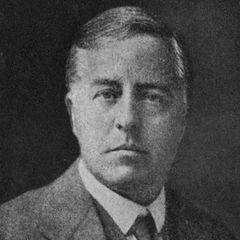
James Jeans
James Jeans was an influential British physicist known for his contributions to astrophysics and cosmology. His research encompassed stellar structure and the origins of the universe, having a profound impact on modern physics.
James Jeans was an influential British physicist known for his contributions to astrophysics and cosmology. His research encompassed stellar structure and the origins of the universe, having a profound impact on modern physics.
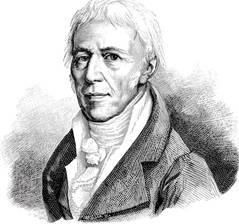
Jean-Baptiste Lamarck was a French naturalist and biologist, a key figure in the history of science. Born on August 1, 1744, in Bazentin, Oise, France, and died on December 18, 1829, in Paris, France. He is known for his contributions to the theory of evolution, particularly his theory of inheritance of acquired characteristics, which suggested that an organism could pass on traits acquired during its lifetime to its offspring. Although his theories are now considered outdated, they laid the groundwork for the modern understanding of evolution.
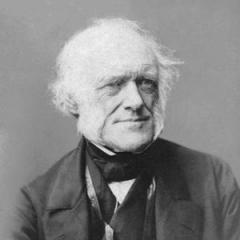
Charles Lyell, born on November 14, 1797 and died on February 22, 1875, was a renowned lawyer and geologist from the United Kingdom. He is best known for his extensive research in geology and his influential book 'Principles of Geology,' which had a profound impact on the development of the field.
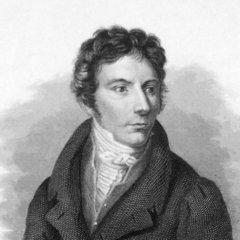
Lorenz Oken, born on August 1, 1779 and died on August 11, 1851, was a prominent German naturalist. He made significant contributions to the fields of biology, philosophy, and art.
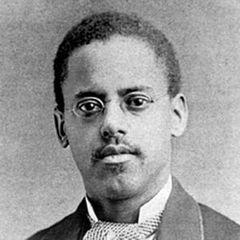
Lewis Howard Latimer was an African American inventor and engineer who made significant contributions to the development of the telegraph and the light bulb. He worked for the Edison Electric Light Company and is credited with improving the incandescent light bulb's filament. Latimer's work in the field of electrical engineering was pioneering and had a lasting impact on the industry.
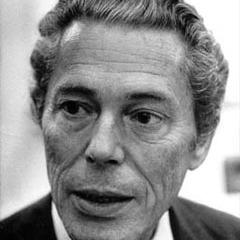
A renowned biologist and French Nobel laureate, Jacques Monod is known for his research in genetics and molecular biology. He made significant contributions to the discovery of gene regulation and the genetic code.
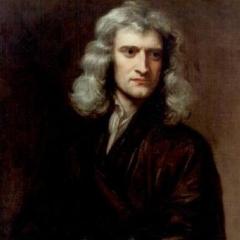
Isaac Newton was an English physicist, mathematician, and astronomer, considered one of the greatest scientists in history. He made significant contributions to physics, mathematics, and astronomy, particularly with his three laws of motion and the law of universal gravitation. Newton's work had a profound impact on the development of modern science and engineering.
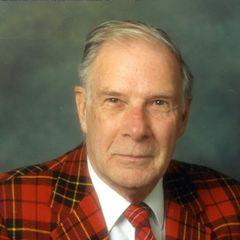
Richard Hamming was an American mathematician and information theorist, born on February 11, 1915, in Omaha, Nebraska, and passed away on January 7, 1998. He is known as the 'Father of the Information Age'. Hamming made significant contributions to mathematics, information theory, and computer science, particularly in the field of coding theory, which has had a profound impact on the development of modern communication technology.
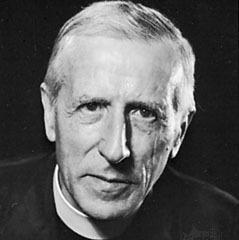
Pierre Teilhard de Chardin was a French philosopher, theologian, and paleontologist. His thoughts were deeply influenced by evolution and religious faith, proposing concepts of 'cosmic consciousness' and 'human unity'. Chardin's works covered various fields such as philosophy, theology, and science, and had a profound impact on 20th-century philosophical and religious thought.
Karl Pearson, born on March 27, 1857 and died on April 27, 1936, was a renowned British mathematician and statistician, often hailed as one of the founders of modern statistics. He made significant contributions to the fields of statistics, biometry, and genetics, particularly in the development of concepts and methods such as correlation coefficients, regression analysis, and hypothesis testing.